Illustrative concentrate photograph from the High Rise archive. The pictured material is not a device, a performance test or a recommendation for any model.
Your e-rig does not need a second screen. If your ideal setup starts with a button and ends without a Bluetooth menu, shop for the controls you will actually use. A longer feature list is no prize when half of it lives on a phone you wanted to leave across the room.
The current Puffco Peak is our starting pick for a straightforward, app-free water rig. The smaller Dr. Dabber XS is a conditional option because its manufacturer specifies CBD use only. The Boost Evo remains useful as an existing-owner comparison, with current availability requiring care. These distinctions follow documented controls and product information, rather than a claimed head-to-head performance test.
What counts as an e-rig without an app?
There are two different shopping questions here. One asks whether a device can run a normal heating cycle without your phone. The other asks whether the features you are paying for depend on software. A connected device can satisfy the first question while leaving you disappointed with the second.
Write down the jobs you expect the hardware to handle: powering on, choosing a setting, starting a cycle and showing battery status. Then check whether custom temperature profiles, firmware updates or extra modes require another screen. Make that distinction before comparing colors, accessories or promotional bundles.
In its official device comparison, Puffco separates the Peak's onboard controls from the connected customization of the Peak Pro. The distinction matters because similar names do not mean identical controls. A listing that simply says “Puffco Peak” deserves a closer look at the actual model.
Puffco Peak: the clearest starting point
The current Peak has four preset heat settings, a single-button interface, a 3D Chamber, a Joystick Cap and USB-C charging. Puffco lists it at $250 as checked on October 13, 2026. It does not offer the Peak Pro's Bluetooth customization. That is a useful boundary for a buyer who deliberately wants fewer controls.
Choose it when you want an integrated water rig and are comfortable accepting the factory presets. The tradeoff is equally clear: you cannot buy the simpler model and expect an app to unlock precise custom profiles later. Decide whether that missing flexibility is welcome simplicity or a feature you will soon miss.
Our Puffco Peak product feature gives the device more room than this controls-focused shortlist. Here, the practical question is narrower. Can everyone who uses the rig understand the basic button sequence without borrowing the owner's phone? That should matter more than a showroom animation.
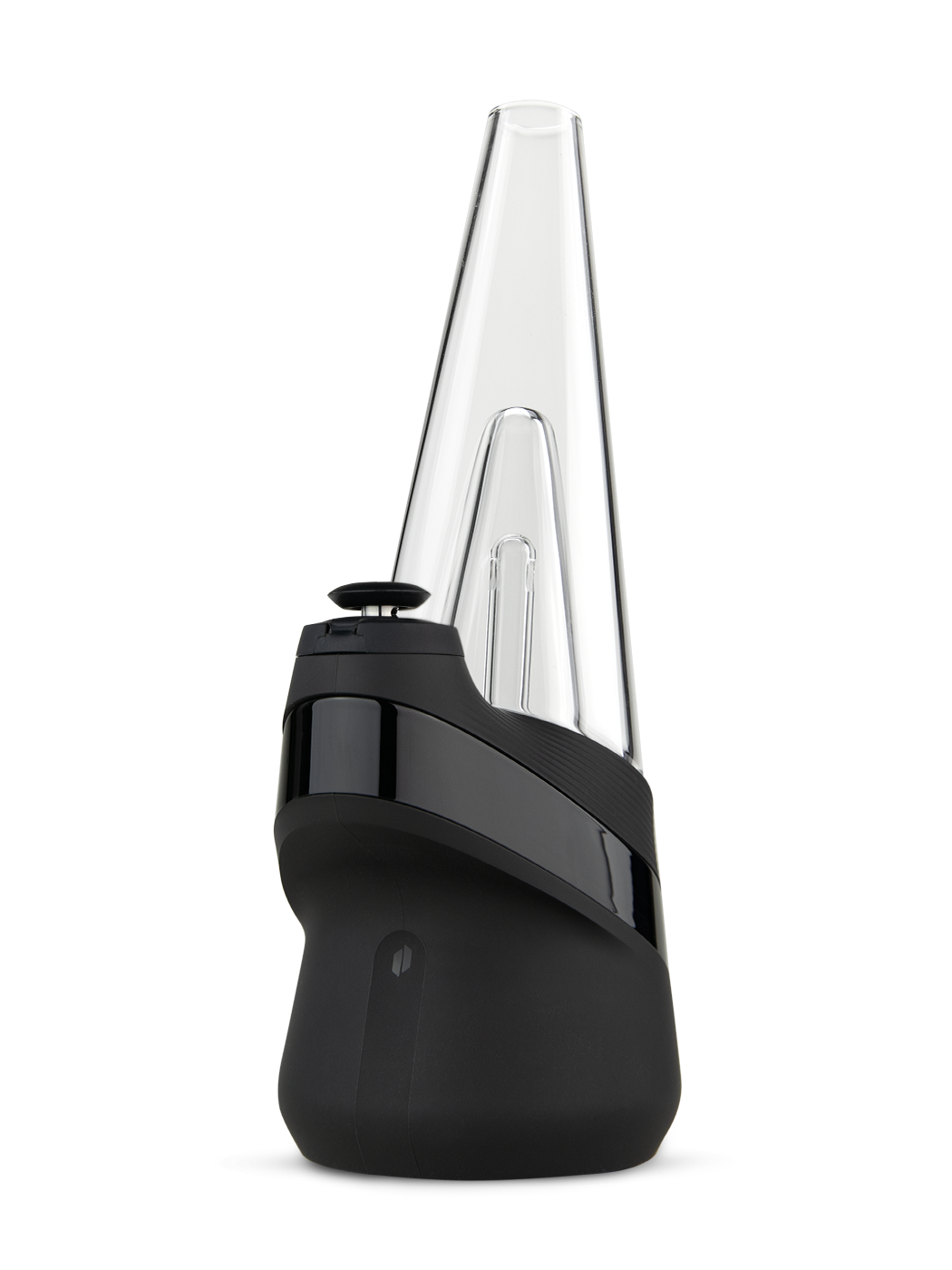
Also pay attention to the exact replacement chamber name. “3D” appears across Puffco's lineup, but a shared technology name is not a universal parts standard. Check the support page for your model before adding a spare to the cart. A glass accessory fitting two devices does not prove their electronic components interchange.
Boost Evo: an existing-owner comparison
Dr. Dabber's Boost Evo instructions document six temperature presets on the standard version, spanning 500–750°F. Temperature selection and basic operation stay on the device, without a separate phone interface. Its quartz eChamber and quick-connect glass adapter are part of a different hardware layout from the Peak.
The former Boost Evo product route redirected to a broader collection when checked on October 13, 2026. Its support documentation remains available, but that does not confirm a new kit is currently sold by the manufacturer. Treat this section as a controls comparison for existing owners, and verify any remaining retailer stock separately.
If you already own an Evo, six presets may cover the choices you want without another purchase. More presets do not establish better performance or better value by themselves. Count the settings you actually use, rather than treating every extra color as an automatic reason to replace working hardware.
Our Boost Evo review covers the broader device. For this decision, examine the connection between the glass, adapter and chamber. Those pieces must come apart for upkeep, so their handling deserves the same attention as the power button. Simplicity should survive cleaning day.
Check the manual that matches the version being sold. The standard Boost Evo settings should not be copied indiscriminately onto every special edition. If a retailer's specifications differ from the manufacturer's guide, resolve the mismatch before buying. Model identity is more useful than an unexplained specification table.
XS: a smaller setup with its own compromises
The Dr. Dabber XS guide lists four presets, a quartz eChamber and USB-C charging. Its single-button interface handles the basic functions directly, without asking the owner to pair a phone. The water attachment uses a separate filling funnel, so the smaller body still comes with a small equipment routine.
The current XS product page states that it is for CBD use only. That restriction comes before size or convenience, so do not read this comparison as permission to use other materials. If its stated use matches your needs, compare the compact format and included accessories.
Before buying, picture where its glass and filling tool will live when the rig is stored. A smaller powered unit does not automatically mean fewer loose pieces in your kit. The setup needs to fit your storage habits as well as your shelf.
The XS buyer guide is the next stop if its size is the main attraction. Do not turn that attraction into an assumption about ruggedness. Compact glass remains glass, and a device marketed for portability still deserves a sensible carrying arrangement.
Cleaning is part of the interface
A no-app rig can still have a complicated ownership routine. Look at how the chamber disconnects, how the glass empties and which surfaces the manufacturer allows you to clean with liquid. The task is to understand those boundaries before residue makes them harder to see.
Boost Evo and XS instructions explicitly prohibit soaking their eChambers. That is worth separating from advice written for other manufacturers' removable components. Do not borrow a soaking routine because both products happen to be electric rigs. Follow the exact chamber instructions, including complete drying before reassembly.
Keep the powered base, removable glass and heating assembly mentally separate. One may allow a cleaning method that another forbids. A short note beside your cleaning supplies can be more useful than another accessory purchase. Record the model and permitted method, rather than relying on a remembered social-media clip.
Compare ownership costs without inventing a lifespan
The sticker price only describes the first transaction. Before choosing a device, find the correct replacement chamber, glass and charging cable. Note whether those parts are currently sold separately. This is a shopping check you can perform without pretending to know how many months your particular chamber will last.
Do not calculate an annual replacement budget from an unsupported lifespan estimate. Usage, handling and maintenance vary, and a warranty is not a promise of routine replacement. Compare the prices of actual parts you could order instead. If one essential component is unavailable, that is relevant even when the complete kit is discounted.
Bundles deserve the same inspection. Separate the device from optional glass, carrying accessories and tools before comparing totals. A larger bundle may be useful, but it should solve a need you already identified. Otherwise, the cheaper-looking package can leave you paying for objects that never leave the box.
A short check before checkout
First, confirm the full model name and generation. Next, read its basic operating sequence and cleaning instructions. Then locate the exact replacement chamber. Finally, ask whether any feature you specifically want requires an app. Those four checks reveal more about everyday ownership than a list of adjectives.
If you already own a connected rig, do not replace it merely because an app exists. Check which functions remain on the device and whether your current settings meet your needs. Buying another rig to avoid a menu you never open is an expensive way to solve an imaginary problem.
For a new purchase, start with the Peak's straightforward four-preset layout. Consider the XS only within its manufacturer's stated material restriction, and evaluate an existing Boost Evo before replacing it. Choose the control scheme and care routine you will happily keep using. The phone can stay where you left it.