A cannabis magazine can make room for a lot more than cannabis. Broccoli puts music, fashion, visual art and overlooked histories within the same covers. The connection is a curious reader, someone whose interests keep moving after the conversation leaves the plant.
That approach makes the independent publisher worth examining beyond its cover design. Its issue descriptions, public editorial calls and founder interviews reveal a practical question: how do you build a publication around an audience without reducing that audience to one interest?
For High Rise, that answer matters because cannabis belongs to a larger creative life. The people making images, collecting records and telling community stories help define that life. Broccoli provides a concrete example of what happens when an editorial team treats those connections as the main event.
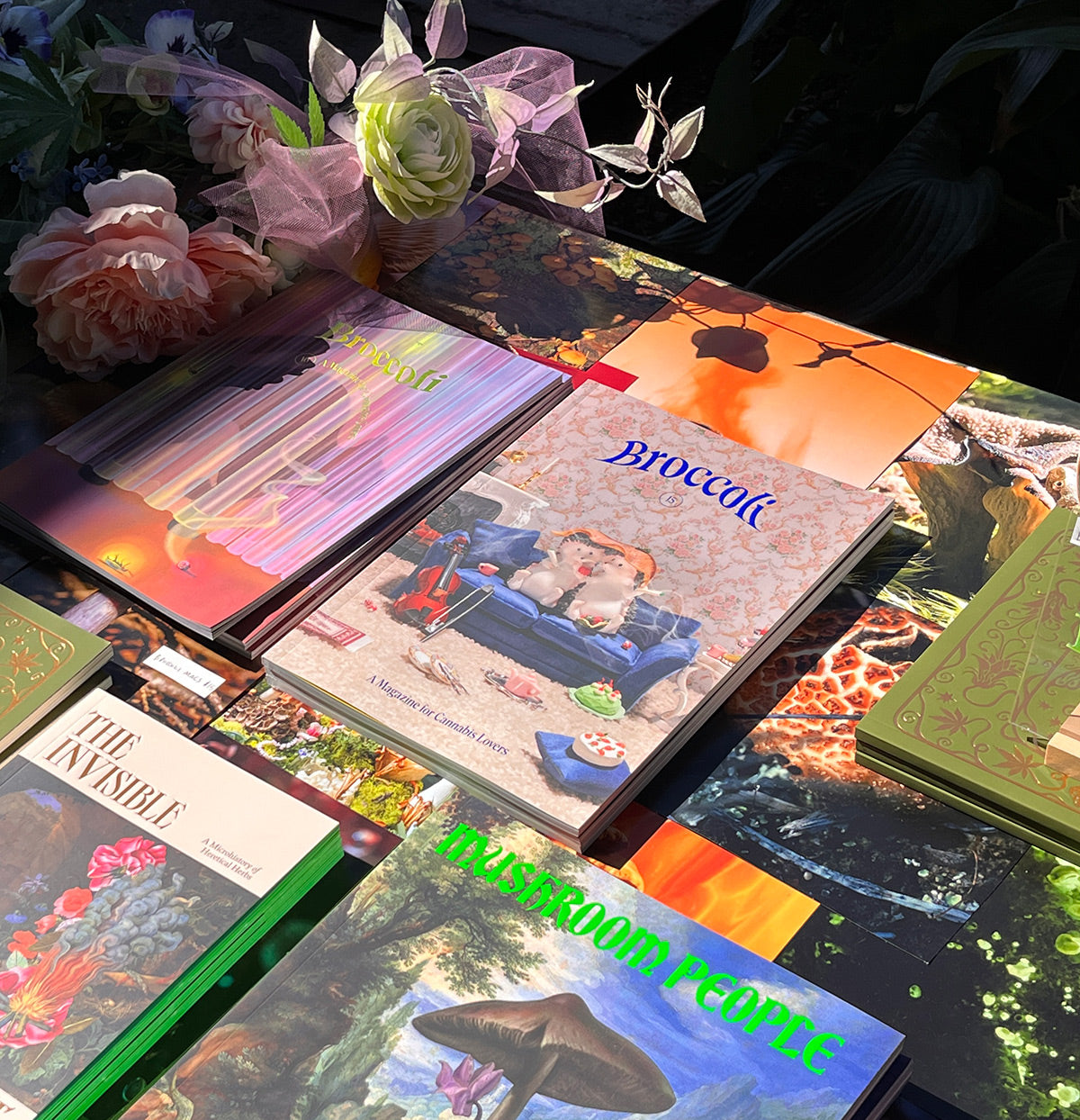
A magazine with room to wander
Broccoli’s current publisher page describes a print business spanning magazines, books and oracle decks. It names Anja Charbonneau as founder and creative director, with Stephanie Madewell editing Broccoli. That wider catalog establishes a useful starting point: the cannabis magazine sits inside an ongoing publishing practice.
The distinction matters when looking at the work. A cover offers an immediate impression. An editorial program reveals which ideas keep earning space, who gets commissioned and how subjects connect across issues. Those choices give a publication its character over time.
A reader can enter through cannabis and stay for an unfamiliar artist, while another discovers an expungement story beside a familiar musician. The magazine creates a shared place for those different routes without requiring a matching set of interests.
This is one reason independent publishing fits cannabis culture so well as an editorial subject. A magazine can preserve the small details that disappear inside broad market narratives: a writer’s curiosity, an unusual visual reference, a decision to give a neglected figure several pages.
Two issues, two different constellations
The publisher’s description of Issue 06 places Lauren Yoshiko’s expungement coverage alongside Ann-Derrick Galliot’s piece on Sister Rosetta Tharpe. Dana Covit contributes a butterfly story, while Shruti Ravindran considers Indian astrology. The listed package runs 88 pages and uses perfect binding.
Those are descriptions of the issue’s contents, rather than a substitute for reading its full articles. Still, the selection itself says something clear. Legal consequences, musical recognition and natural-world curiosity can share a table of contents without becoming the same story.
That adjacency is an editorial choice, asking readers to move between different kinds of attention. One subject calls for historical context, another rewards close looking and a third invites questions about belief. Cannabis provides an audience connection while leaving those subjects their own shape.
Issue 19 offers a different mix: UKWIAL’s fashion-office imagery, Caroline Zimbalist’s bioplastic work, Women Under the Influence and Brenda Equihua appear in its description. The issue is listed at 128 pages, measuring 7.3 by 10.4 inches, with perfect binding and art paper.
The difference in page counts does not establish a simple growth story. These are two separate editorial packages. What carries across them is permission to follow specific people and ideas, rather than repeating one expected version of cannabis imagery.
The invitation behind the finished pages
A public call for Issue 20 pitches, dated January 23, 2024, provides a rare look at the commissioning process. It asked for subjects including swans, letter writing, little-known places and historical figures deserving wider recognition. It also said a specific cannabis angle was unnecessary.
The call paired questions about interview access and image rights with a preference for subjects suited to a long print cycle. Its stated deadline has passed; these instructions document that issue’s editorial thinking, rather than an open invitation to submit work today.
What stands out is the relationship between imagination and preparation. An unusual subject still needs access, just as an archival profile still needs usable images. The romantic idea of independent publishing rests on concrete decisions about people, permissions, time and space.
For readers, that work is mostly invisible when a finished spread presents an image and story together. The earlier questions about rights or availability disappear. Looking at a commissioning call brings those choices back into view and gives contributors their place in the publication’s identity.
Curiosity has an audience
In a January 2024 interview with magCulture, Charbonneau discussed Broccoli alongside Catnip and the publisher’s other projects. She described an interest in niche audiences and subjects that excite the team. The interview also connected editorial enthusiasm with the practical question of supporting a publication.
That is a useful corrective to the idea that a distinctive magazine arrives fully formed. Taste needs a way to reach people, and an audience needs a reason to return. The interview makes those considerations part of the same publishing conversation.
For a cannabis audience, specificity can be more welcoming than a generic attempt to include everything. A well-chosen artist gives readers something to investigate, while a concrete historical subject offers a path into unfamiliar material. The connection develops through attention, rather than a promise that every page will mirror the reader.
High Rise’s feature on cannabis mylar in fine art approaches a neighboring question: what happens when objects and imagery associated with cannabis enter another creative setting? The magazine provides a different format for that exchange, with editorial sequencing doing part of the work.
What paper asks of a reader
Broccoli’s July 2023 essay, “Digital Is Dead! Long Live Print!”, makes the publisher’s case for physical publications and reader support. Its argument connects subscriptions with the ability to commission contributors and sustain independent editorial work.
The title is a provocation, not evidence that digital publishing has disappeared. Its more useful point is about the relationship between an object, its makers and its readers. Paying attention to that relationship helps explain why a magazine can matter beyond the information it contains.
A printed issue gives each story a physical neighborhood. The preceding image, the following headline and the amount of space between them become part of the experience. Readers can pause, flip backward or notice a connection the contents page never announces.
That experience differs from following a single link to a single story. It encourages a second encounter with subjects that did not bring someone to the magazine initially. A publication built around curiosity can use that extra encounter well.
Look beyond the cannabis shorthand
There is a simple way to approach an unfamiliar issue: start with the contributors. Note who made the photographs, who wrote the profiles and who designed the pages. Follow one name into their other work, letting the publication introduce you to a creative community.
Next, consider the relationship between stories. Does the issue connect through a shared theme, a visual mood or a set of contrasting subjects? Those are interpretive questions, not a demand that every page deliver the same message.
Finally, distinguish the publisher’s description from your own response to the finished work. A product page can establish a contributor or page count. It cannot supply the full argument of an unread essay. That boundary leaves room for discovery and avoids turning a magazine into a list of attractive names.
For more perspectives on how cannabis enters everyday creative spaces, High Rise’s Houseplant home-design feature offers a separate example. The medium changes, but questions about identity, presentation and audience remain worth asking.
A wider picture of the community
Broccoli’s public archive shows an editorial practice that lets cannabis readers have expansive interests. Its value as a subject lies in the decisions: commissioning unfamiliar histories, bringing different disciplines together and making space for contributors whose work exceeds a category label.
That leaves an appealing challenge for anyone covering this culture. Follow the people closely enough to discover what else they care about, then make the connections concrete. Give an artist, writer or reader more room than the most obvious story would allow.
Explore more people and projects through the High Rise media directory. A good publication can be a starting point for that exploration, and a well-made issue can keep introducing its readers to something new long after its release.