An electric cannabis grinder earns its place when the motor handles a task you want to stop doing by hand. A manual grinder earns its place when you want direct control, compact storage and no charging routine. The useful comparison starts there, before the words “smart,” “premium” or “perfect” arrive on the box.
There is another distinction that gets lost in broad category arguments: electric describes the power source, not a single grinding mechanism. A motorized mill, a cone-filling machine and a conventional toothed grinder do not perform exactly the same job. Manual mills also complicate the idea that every hand-operated tool simply shreds flower between teeth.
We use the Banana Bros. OG OTTO and Flower Mill’s Next Gen Premium as concrete examples of those differences. They illustrate two approaches rather than proving one category universally superior. This is a comparison of documented designs and practical buying tradeoffs, not a hands-on consistency test.
Decide which task you want to automate
If twisting a grinder is the annoying part, a motor directly addresses that movement. If transferring material into a cone is the annoying part, a device that only grinds may leave the actual problem untouched. Start by naming the step you want to change.
The OG OTTO product page describes a powered milling system paired with cone-filling accessories. Banana Bros. says its mechanism adjusts direction, speed and pressure in response to the material. Those are manufacturer descriptions of the system, not a High Rise verification of every performance claim.
That design is a different proposition from a handheld manual mill that deposits material in a catch. The latter can be enough if you want prepared flower without a dedicated cone-filling arrangement. Extra automation has less value when it automates something you do not do.
Our Banana Bros. OTTO review covers the device separately. Use the exact model and included accessories when comparing it with another electric unit. The OTTO name alone does not tell you that every package contains the same parts.
Manual does not describe one mechanism either
Flower Mill’s Next Gen Premium uses a milling plate and rotating upper section. The manufacturer’s instructions describe light back-and-forth movement, with little downward force. That is a specific manual process, not evidence that every hand grinder works identically.
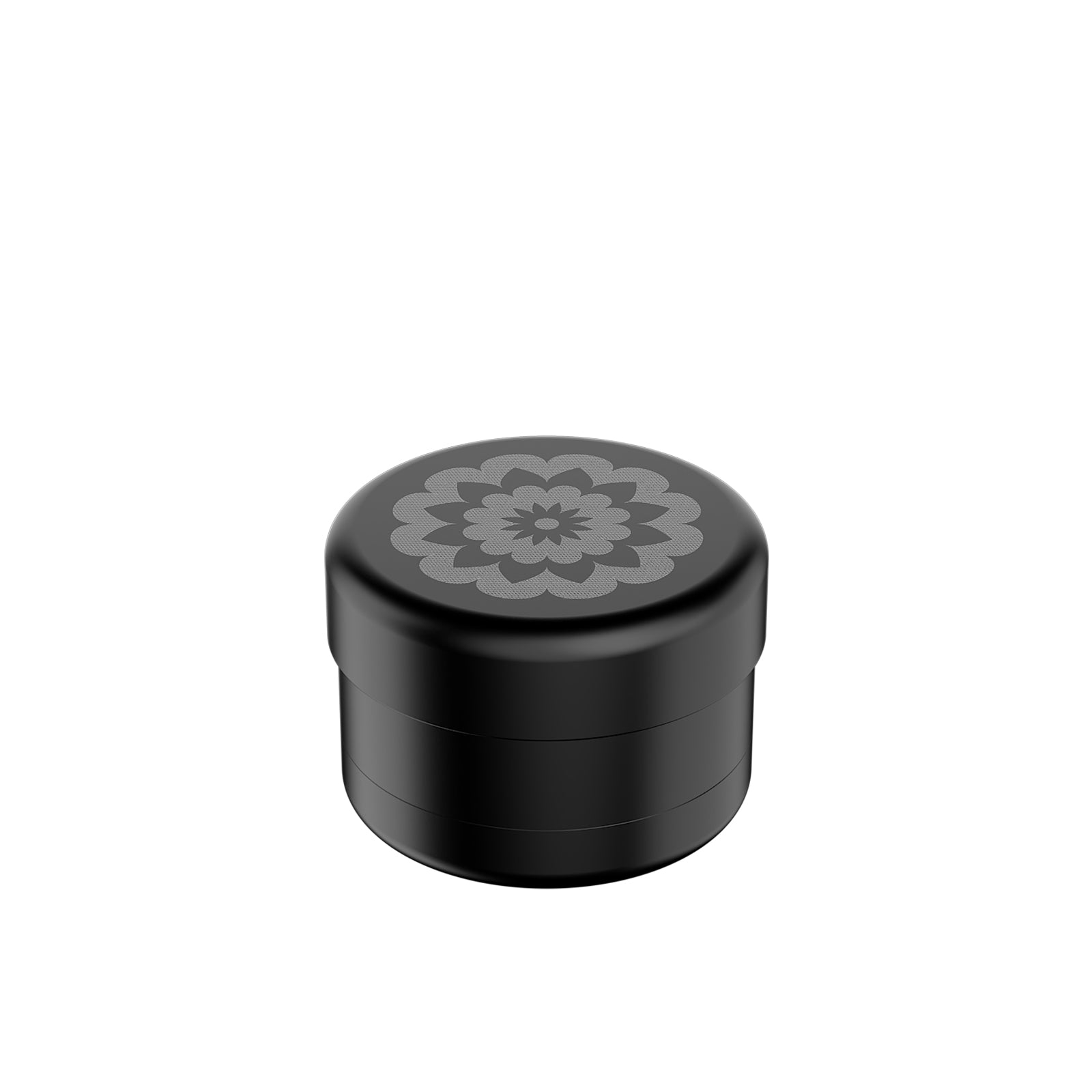
The 2.5-inch Premium Aluminum model lists a stainless steel milling plate, aluminum components and a removable pollen screen. Its included plate is Medium, with other plate options sold in the same product family. The mechanism gives you a different way to choose consistency.
Changing a plate is also different from pressing a button longer. It requires the compatible part and a willingness to swap it. Whether that feels useful or fussy depends on how often you expect to change the result you are preparing.
Our Flower Mill spotlight provides background on this approach. For a purchase, check the current series and material configuration. A premium stainless model and an aluminum model should not be treated as the same item because they share the brand.
Consistency needs evidence beyond a slogan
A claim of perfect consistency is easy to print and harder to demonstrate. Flower condition, the amount loaded, the mechanism and the way the tool is operated can all complicate a category-wide claim. “Electric” is not enough information to establish the finished result.
For manual tools, the way you turn or load the device can matter. For powered tools, the way the machine handles loading and stopping matters. A useful review should identify the tested model and method instead of presenting one attractive photograph as proof.
Ask what adjustment the device actually offers. Is it a selectable plate, a motor response, a timed operation or simply a different amount of user input? Those mechanisms give you a clearer comparison than words such as fine, fluffy or premium without a stated reference.
We have not run matched samples through these devices, so there is no numerical consistency winner here. The recommendation rests on their documented designs and the tasks they combine. That leaves room for a buyer to choose without inheriting a fictional lab result.
Capacity and footprint should be checked together
Flower Mill lists the 2.5-inch Premium Aluminum model with capacity up to 3.5 grams and dimensions of 2.6 inches wide by 1.8 inches high. Treat the capacity as the manufacturer’s specification. It is not a recommendation about how much anyone should consume.
A quoted capacity tells you less if the assembled tool does not fit where you plan to store it. Cone-filling systems add components around the milling unit, while compact manual tools can have catches, screens or other sections that change their overall height.
Compare the full working arrangement, not a cropped picture of the main body. Include the cone holder, catch, charging cable and any small accessories you intend to keep together. The setup that looks compact on a product page may occupy more of your drawer than expected.
If you regularly prepare small amounts, a large tool can be unnecessary. If your current tool requires more separate steps than you want, capacity may become relevant. The point is to match the tool to the work without confusing size with quality.
A motor changes effort, not every interaction
An electric device can reduce the repeated turning required by a manual tool. You still need to open it, load it, manage the output and clean it. Consider those actions individually rather than assuming one powered feature makes the whole process effortless.
If grip or repetitive movement affects your choice, inspect the button placement and latch as carefully as the motor description. A device that removes twisting but introduces an awkward closure may not solve the problem you started with. A demonstration of the actual mechanism is more useful than a general claim about convenience.
Manual tools likewise differ in grip diameter, lid shape and the force their instructions call for. Flower Mill’s light-pressure directions describe that particular design. They do not establish a universal comparison with every electric grinder or guarantee that every person will find it comfortable.
The best fit is the tool whose complete sequence you can operate comfortably. That includes taking it apart for routine care and putting it back together correctly. Ease of use extends beyond the few seconds when the material is being processed.
Cleaning access can outweigh the power source
Powered and manual designs both have surfaces where material can collect. The most useful product photographs show those surfaces exposed. Look for access to the working mechanism, catch and transfer path instead of judging maintenance from the exterior alone.
Banana Bros. includes a brush function in OTTO’s four-in-one accessory tool and describes it as a way to clean the milling teeth. That is an actual maintenance provision. It does not authorize immersing the motor housing or assuming every cleaning liquid is suitable.
For any powered model, follow the current manufacturer instructions and keep electrical components within their stated cleaning limits. For a manual model, check its materials and removable pieces before choosing a method. “No battery” does not mean every finish, seal or bushing accepts the same treatment.
Avoid buying on an unsupported promise that one category never needs maintenance. Instead, decide whether you can reach the parts that will need it. A mechanism you can inspect and understand is easier to evaluate than one hidden behind a broad easy-clean claim.
Charging and accessories belong in the comparison
A manual tool avoids a battery and charging cable. That can be decisive if you want something that remains ready in a drawer without another charging task. It does not make manual tools immune to wear, damage or missing components.
A powered tool adds charging needs in exchange for the work its motor performs. Verify the connector on the exact model rather than assuming every recent-looking device uses USB-C. The OG OTTO listing names a Micro USB cable among its accessories.
Also separate included components from optional ones. A listing may show cones, a case or several small adapters while selling a narrower package. If the feature you want depends on a missing accessory, include it in the actual purchase comparison.
Our electric grinder guide introduces several named options. Treat it as a way to identify candidates, then confirm the current model, availability and instructions with the manufacturer before deciding.
Which type fits your routine?
Choose electric when the powered mechanism removes a specific unwanted step and you are comfortable with the charging and cleaning arrangement. If cone filling is the goal, compare machines that actually address that step. A motor by itself is not the same feature.
Choose manual when compactness, direct control and avoiding a battery matter more than automation. Then compare mechanisms within the category. A plate-based mill and a conventional toothed grinder should earn their place on their actual design, not on the shared manual label.
Before buying either, establish five things: the mechanism, assembled size, adjustment method, cleaning access and included parts. Those answers produce a useful choice without a universal winner. A tool earns the space it takes up when it removes the annoyance you actually wanted gone.