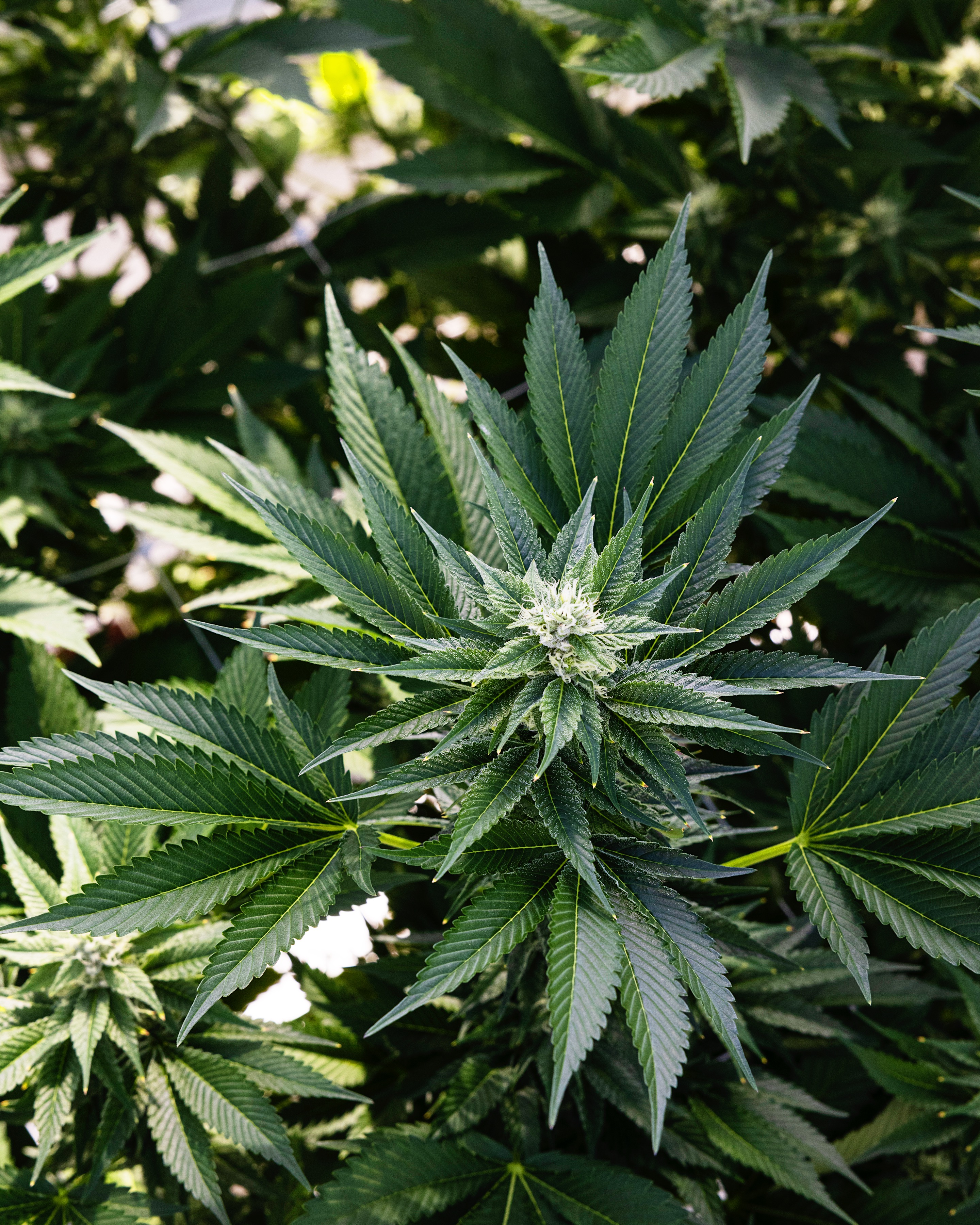
Illustrative cultivation photograph from High Rise’s approved archive. This is not a named Los Angeles licensee.
Los Angeles cannabis businesses have been given more time on one licensing restriction. Their ordinary renewal calendar still deserves a separate line on the wall. The distinction matters because a delayed tax rule, a payment program, and a permit milestone do different jobs. Combining them into one promise of relief would give readers the wrong picture.
Beard Bros reported on October 9 that the city had postponed restrictions tied to delinquent taxes. Its coverage follows LAist’s October 6 reporting on the Council vote. Meanwhile, the Department of Cannabis Regulation’s current renewal guide lists a November 2 deadline for the 2027 cycle. Those dates belong together, but they do not mean the same thing.
What the reported vote changes
According to LAist, the Council voted to delay the new tax-related restrictions for one year. The planned rule would have limited renewals to businesses owing less than $1 million in city taxes and delinquent for less than four years. LAist reports that the thresholds were intended to tighten over time.
The reason for the delay was practical. A separate payment arrangement, intended to provide a route for otherwise ineligible businesses, could not launch in time. LAist attributed the implementation problem to the Office of Finance. The reporting describes a mismatch between the restriction’s timetable and the city’s ability to administer its accompanying relief.
This article treats the vote as a reported development. The renewal guide discussed below confirms the ordinary application dates and permit milestones. It is a separate source, and it does not itself document the Council’s tax-related action. Keeping those sources distinct helps prevent a general guidance page from being mistaken for the new measure.
The renewal date still has its own job
DCR’s guide to the 2027 renewal cycle gives a submission period of September 1 through November 2, 2026. Its current website banner also identifies November 2 as the closing date. That is the published calendar readers can check directly, alongside any later notices applying to their particular license.
The guide describes a form covering progress toward building plans. Licensees attest that they have retained a licensed architect or engineer, obtained a building permit application number, or are seeking a one-time hardship exemption. Those choices concern the permit process. They are not interchangeable with a tax payment agreement or the reported delay.
DCR also says the hardship extension does not move future renewal milestones. Its guidance points ahead to the LADBS Clearance Summary Worksheet required for the 2028 cycle. A business can therefore face several different timelines at once. An extension connected to one requirement should not be read as an extension of every other requirement.
For a reader watching the industry from outside, this explains why a reprieve can matter without resolving the entire problem. A store’s ability to keep progressing through licensing involves documents, premises, and administrative decisions. The latest headline addresses one part of that process. It does not erase the work attached to the remaining parts.
A historical debt figure needs its date
There is also a material discrepancy in the public reporting. The October news accounts describe a $500 million debt figure associated with a 2025 city report. The Office of Finance’s October 2, 2025 report instead states $400 million, including interest and penalties. We are using the original document for that historical figure.
The same report explains why the headline total needs qualification. It includes older liabilities and accounts associated with businesses no longer operating. After filtering for currently licensed businesses and excluding liabilities outside the collection period, Finance estimated roughly $150 million. Both figures are dated estimates in that document, not a current account balance for October 2026.
That distinction affects the story’s meaning. A broad administrative balance is different from the amount the city believes it can pursue from active licensees. Neither number establishes what an individual operator owes today. Nor does either amount equal money the city has actually collected through a relief program.
It would be tempting to choose the larger number because it makes a sharper headline. The more useful approach is to state the document, its date, and its limits. A reader should be able to tell whether a figure describes recorded liabilities, a narrower estimate, or cash already received. Here, those categories cannot be collapsed.
Permission to renew is different from debt resolution
The reported delay concerns when a licensing restriction applies. Debt resolution concerns a different sequence: establishing the obligation, agreeing on terms, making payments, and determining whether any conditional relief has been earned. A change in the first sequence does not demonstrate completion of the second. That is the central distinction behind this development.
Payment programs also require more than a public announcement. Someone must receive applications, reconcile records, communicate terms, and track performance against an agreement. The importance of those tasks is visible in the gap described by the reporting. A policy can promise a route forward before the office administering it is ready to accept participants.
For that reason, an announced program should not be described as an operating enrollment window without a current notice. The available reporting establishes a delay tied to implementation. It does not establish that every interested business can already sign an agreement. Readers should distinguish the existence of a policy from evidence that its application process has opened.
Similarly, being allowed to seek renewal says little about a company’s overall finances. It is not proof that a business has recovered, settled every obligation, or gained new investment. This story is about administrative time and the possibility of continued operation. A stronger claim would require evidence from the businesses themselves.
The neighborhood stakes are broader than a balance sheet
Licensing decisions can determine which established storefronts remain part of a neighborhood’s cannabis market. For customers, that means continuity of access and familiar retail relationships. For the wider industry, it affects the places where independent brands meet buyers. Those are reasons to follow the process beyond the initial vote.
Our DTLA dispensary guide looks at the customer-facing side of that landscape. This news belongs to the administrative side. A retailer’s presence in a guide should never be treated as confirmation of its current tax position. Public descriptions of a store and official records of its license answer different questions.
The issue also sits beside California’s wider debate over the licensed and unlicensed markets. High Rise’s coverage of state funding for local cannabis enforcement addresses another part of that debate. Enforcement funding and an LA renewal delay are separate actions. Their connection is the question of how public policy shapes participation in the regulated market.
What would make the next update meaningful
The next useful development would be a current city notice explaining the delayed restriction and its implementation dates. Another would be a clear application window for the payment program. Participation totals, executed agreements, and actual collections would then show whether the program is working. A projected revenue figure cannot provide that evidence on its own.
For businesses and industry readers following those developments, the source matters as much as the announcement. DCR guidance speaks to licensing procedures; Finance materials address the payment program. News reporting helps explain decisions and their consequences. Reading them together is useful, provided each source is allowed to establish only what it actually says.
High Rise follows that larger business context through reporting and its cannabis brand directory. In this case, the immediate story is a reported year of breathing room for a specific restriction. November’s published renewal deadline, future permit milestones, and unresolved tax obligations remain separate questions. That is the distinction to carry into the next city update.