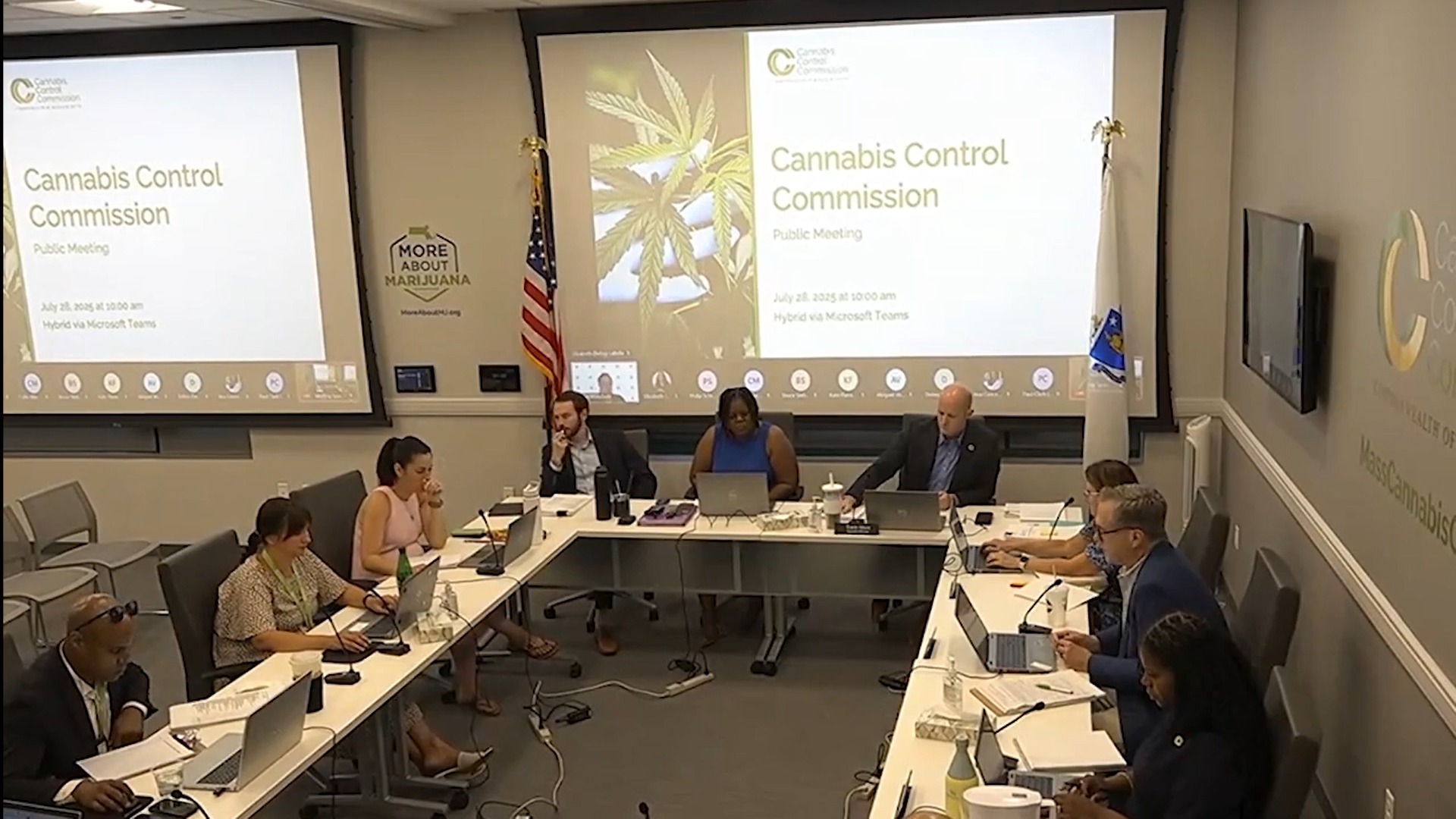
Massachusetts has given cannabis drive-thrus a route through its existing regulations. On November 17, the Cannabis Control Commission voted 3–0 to allow licensed retailers and medical establishments to offer the service when their plans meet commission requirements and local conditions. The practical news is a review process, with specific rules for the vehicle, the window and the transaction.
For customers, the headline raises a useful question: what changes when the counter is beside a car? The answer starts with identification and continues through site approval, security and transport. A window can change the shopping experience while the wider rules around buying and carrying cannabis remain in place.
What the commission actually approved
The commission’s announcement says its regulations do not specifically authorize drive-thru service. Commissioners determined that existing security requirements can cover drive-thru areas, subject to review. That distinction explains why the decision reaches beyond simply permitting a transaction through an open window.
Licensees must submit proposed floor plans and operating procedures. The commission also requires camera coverage, age verification for every vehicle occupant at entry and sale, transaction and product visibility controls, outside signage and any additional municipal approvals. Proposed substitutions for certain security requirements can be submitted for consideration.
These conditions put the service inside a defined operating plan. A shop’s location, customer flow and proposed procedures matter to that plan. The announcement establishes what operators must address; it does not announce a statewide opening date or identify a new service at every licensed store.
Two ID checks already belong to retail
The commission’s September 11 adult-use regulations already require identification checks when someone enters a retailer and again at the point of sale. The public commission copy labels itself unofficial and informational, with official versions available through the State Bookstore. It supplies useful context for the November announcement’s two-stage approach.
The drive-thru condition concerns everyone in the vehicle. That makes the passenger list part of planning a visit, rather than an afterthought for the person placing the order. Customers should read the specific shop’s instructions before joining a lane and have the required identification ready for the stated checks.
For example, a group collecting one person’s order still needs to understand the all-occupant requirement. An online checkout and an adult driver do not, by themselves, answer the question of who may enter the drive-thru. This is a practical consequence of the announced condition, rather than a prediction about how quickly any particular lane will move.
The window belongs to a security system
The existing adult-use security framework covers more than a single camera above a register. Its provisions address entrances, exits, sales areas and parking lots, alongside the ability to identify people in camera recordings. That broader system helps explain why an operator has to describe the proposed area and its procedures.
Retail identification also has a privacy boundary. The existing rules restrict retaining additional personal information without voluntary written permission, subject to stated delivery exceptions. An ID check should not be read as blanket consent for unrelated data collection. That distinction matters when a customer is asked for more than proof of age.
The commission’s visibility conditions also give the design a particular purpose. The transaction must be kept out of public view, and products must not be visible from the drive-thru windows. Privacy, product handling and the physical arrangement of the site therefore belong in the same conversation.
A nearby example shows the idea, not the approval
NBC 10 WJAR’s November 17 reporting visited Mother Earth Wellness in Pawtucket, Rhode Island, where a drive-thru has operated for roughly three of the business’s four years. Owner Joseph Pakuris described regular shoppers ordering ahead and collecting an order without leaving their cars.
That is a concrete example of the convenience customers may have in mind. It is also a different jurisdiction. The Rhode Island business illustrates a service model; it does not establish that a Massachusetts shop has received its required approvals or can use the same operating arrangement.
WJAR also spoke with Zahara Cannabis in Attleboro. Assistant inventory manager Nikki Randall described interest in the idea while questioning whether the location’s geography would accommodate it. That is a feasibility discussion. Turning it into an announced opening would skip the very question the employee raised.
The municipality still has a role
Ganjapreneur’s November 18 coverage reports the new route alongside its operating conditions. The combination matters: a state-level decision and the additional local approvals required for a particular property are separate pieces of getting a service into operation.
For West Coast readers, our coverage of Los Angeles cultivation applications offers a different example of why the jurisdiction and the stage of permission belong in the story. The two systems govern different activities. Neither should be used as a shortcut to the other’s requirements.
A customer checking a shop’s announcement can ask three precise questions: is this location actually offering the service, what instructions govern entry and collection, and which hours apply? A statewide headline cannot answer those site-level questions. Clear operating information from the business becomes more useful than an assumption that every window works the same way.
Ordering ahead and curbside are different services
The commission says its medical curbside authorization ran from March 2020 through December 2023 and has ended. It also says people can still order online before traveling to a store. The drive-thru decision should therefore be read on its own terms, rather than as an announcement that every earlier pandemic-era service has returned.
For planning a pickup, keep the order channel and the collection channel separate. A business may accept an online order, but its instructions still determine where that order is collected. Confirming the collection method first can prevent a customer from arriving at the wrong entrance or expecting an unadvertised service.
The same distinction helps with accessibility questions. The commission identifies potential benefits for people with mobility issues, while actual availability depends on the reviewed service at a specific property. A customer who needs a particular accommodation should ask the location how its process works before relying on the general announcement.
Collection leaves the road rules intact
Massachusetts’ adult-use statute preserves penalties for impaired vehicle operation and consumption while operating a vehicle. The retail decision concerns collection. It does not create permission to consume behind the wheel or drive impaired after a purchase.
Section 13 separately addresses open cannabis containers in the passenger area on roads and other places accessible to the public. Its definition includes packaging with a broken seal or contents partly removed. The statute also distinguishes the passenger area from places such as a trunk or locked glove compartment.
The commission’s consumer guidance tells adults to keep cannabis closed and properly stored during transport, and warns against crossing state lines with it. For an out-of-state visitor, the ability to buy and the ability to take a purchase home across a border are different questions. A collection window changes neither boundary.
Convenience depends on the details
The meaningful change is a reviewed option for licensed businesses to offer a familiar kind of service. Its usefulness will depend on which locations implement it, how clearly they explain it and how the required checks fit the property. The November vote establishes the regulatory route, while individual operators still have work to do.
Readers following that next stage can find Ganjapreneur’s publication profile and WeedWeek’s reporting profile in High Rise’s media directory. Follow actual opening announcements and subsequent reporting for operating details. The useful story now is which reviewed services are available and how they work for the people using them.