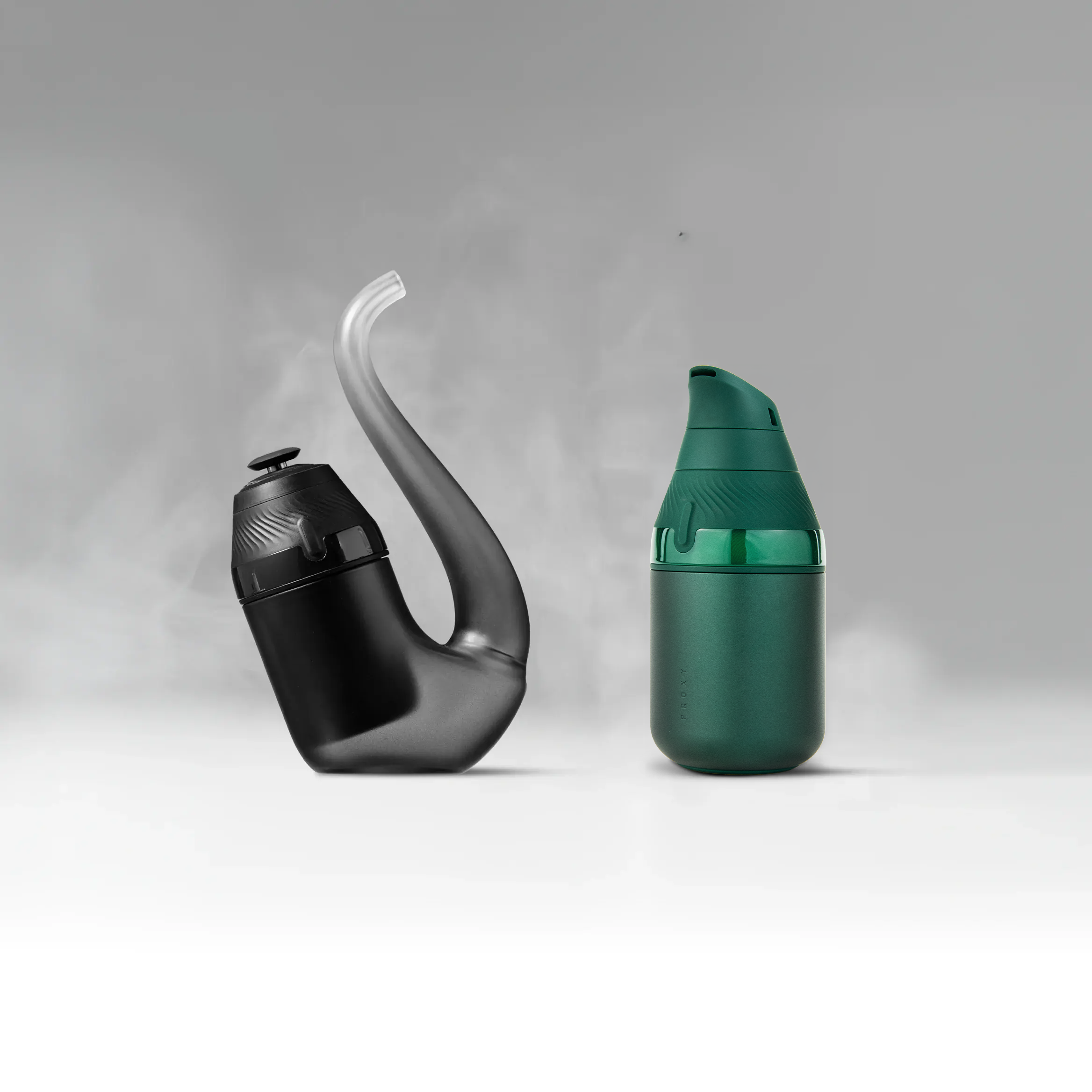
Hero image: detail of the Puffco Proxy Pipe and Core configurations. Manufacturer photograph; the full image appears below.
The Puffco Pivot and Proxy solve different packing problems. Pivot puts its chamber, battery and mouthpiece into a narrow handheld body. Proxy puts a removable heating base at the center of a collection of pipes and other attachments. That difference matters more than deciding which one looks more expensive on a coffee table.
There is also a naming trap. This comparison covers the current, app-enabled Proxy, including the Core and Pipe kits. Older Proxy reviews describe a different generation without the same connected controls. If a discounted listing simply says “Proxy,” establish which base and kit it contains before comparing anything else.
For a compact device with four onboard presets, Pivot is the cleaner starting point. For custom settings and a base you can move between compatible pieces, Proxy makes the stronger case. Neither choice requires pretending that everyone wants the same setup.
What the price difference actually buys
On September 28, 2026, Puffco’s official comparison page listed Pivot at $150, Proxy Core Kit at $250 and Proxy Pipe Kit at $280. Those are manufacturer-listed prices, before any applicable checkout charges. Retail promotions and color availability can differ.
The Core Kit matters because “Pivot versus Proxy” no longer automatically means a small handheld versus a glass pipe. Core packages the Proxy base with a compact cup and mouthpiece. The Pipe Kit puts that base in a pipe-shaped glass piece. Both belong to the current Proxy platform.
The extra spend therefore buys a different control system and attachment platform, while the chosen kit determines the starting shape. A buyer who wants a pipe should compare the complete Pipe Kit price. Someone interested in the compact Core should not budget for a pipe they never intended to carry.
If you want background on the pipe format, our Puffco Proxy Pipe Kit review covers that setup separately. Read any older-generation references alongside the current product specification before making a purchase.
Pocket device or modular base
Pivot’s strongest argument is its integrated shape. You do not need to choose a glass body to understand the basic device. Its mouthpiece and chamber sit above the battery, with one button and a light bar handling the visible interface. Fewer initial configuration decisions make it easier to identify what belongs in your bag.
Proxy’s removable base changes the ownership story. Puffco says its current base fits previous Proxy glass, giving existing owners a reason to look beyond the starter kit. That compatibility does not mean every accessory carrying the Puffco name fits. Peak, Pivot and Proxy parts remain separate product families.
Consider the complete kit you would actually move around. A Proxy Core configuration and a long glass Proxy pipe create different storage needs despite sharing the base. Calling one device “portable” skips that distinction. Measure the assembled setup and its protective storage, then compare those dimensions with the space you have.
Four presets versus custom controls
Pivot uses four preset heat settings through its single button. The official Pivot support page also documents a battery-level check, haptic feedback and Boost. It does not require the Connect app for its normal controls.
The current Proxy adds Connect app customization alongside its onboard operation. That is useful if you want to save a particular configuration instead of choosing only among factory presets. It also introduces a practical question: do you want another device paired with your phone?
A feature only earns its place if you use it. If you tend to pick one preset and leave it there, an app may add little to your routine. If preset-only controls are the reason you are replacing your current hardware, spending more on another preset-only device misses your own brief.
Neither interface proves better build quality, better extract quality or better results for everyone. Controls tell you what you can adjust. They do not substitute for independent testing, and this comparison does not claim a side-by-side performance test.
Water filtration changes the configuration
The standard Pivot and both listed Proxy kits are dry configurations in Puffco’s comparison. A glass pipe shape should not be confused with a water chamber. If water filtration is your priority, identify the specific compatible attachment that supplies it.
Puffco sells a separate Pivot Glass Adapter. Proxy has its own compatible glass ecosystem, including configurations beyond the starting pipe. Those accessories change the total spend and the number of pieces you need to maintain. An inexpensive base price can stop being inexpensive once you assemble your actual setup.
Write down the configuration before comparing totals: device, chosen attachment, protective storage and any replacement component you want immediately. This prevents a stripped-down kit from being compared with a fully equipped one. It also shows whether the appeal lies in the device itself or an accessory photograph.
Our Proxy and Dr. Dabber XS comparison looks at another format decision. That context helps if you are still deciding between a modular dry setup and a compact rig with water filtration.
Battery claims need their conditions
Puffco rates Pivot for up to 15 heat cycles on its lowest setting. Its support documentation says Boost counts as an additional cycle and reduces battery life. Treat that figure as a stated test condition, not a promise that every charge delivers the same number of sessions.
The current Proxy overview also advertises up to 15 cycles. Matching headline numbers do not establish identical battery performance. Session duration, settings and repeated heating make a comparison more complicated than dividing the price by a quoted cycle count.
For practical planning, ask when charging becomes inconvenient. A device used near a charger faces a different constraint from one packed away for most of the day. If a retailer claims substantially different battery figures, find the model generation and stated conditions behind those numbers before treating them as an upgrade.
Cleaning is part of portability
Pivot’s small size does not erase the chamber, mouthpiece or connection that need attention. Puffco’s support instructions distinguish removable parts from the powered base. That distinction should remain intact when following any cleaning guide.
The support page calls for cleaning the bowl and mouthpiece with a cotton swab after use. For a deeper clean, it gives separate procedures for the chamber, mouthpiece, base connection and glass adapter. Read the procedure for the actual part instead of dropping the assembled device into cleaning liquid.
Proxy adds whichever external piece you select. A compact Core and a large glass attachment will not take up the same drying or storage space. Modularity makes it possible to change configurations, but every extra piece still needs somewhere to live when it is not attached.
A useful buying question is whether you can access the parts you will clean regularly. Look at the chamber connection, the mouthpiece and the chosen attachment. The product photo that matters most may be the disassembled view, not the dramatic lighting shot.
Avoid the wrong-generation bargain
Before buying a discounted Proxy, ask for the exact product name, base generation and box contents. A current photograph on a retailer’s category page does not establish what sits inside an older package. App capability should be confirmed for the unit being sold.
Apply the same discipline to replacement chambers. Shared “3D” language describes a technology family; it is not a universal part number. The correct chamber needs to match the device, and a listing should say so clearly. Buying two incompatible parts at a discount still leaves you with two incompatible parts.
Keep the receipt and verify the seller’s support and return terms before opening the package. This matters especially when a listing mixes old product copy with new photography. The goal is a clearly identified kit, with a clear path to service if it arrives incorrectly.
Which one fits your setup?
Choose Pivot when you want a narrow, straightforward device and are comfortable with four presets. Its appeal is easy to explain without building an accessory wish list. If that already describes your needs, there is no obligation to spend up for an app.
Choose the current Proxy when you want adjustable settings or already know which compatible pieces you want to use. Then choose Core or Pipe deliberately. The platform is the larger decision; the starter shape determines how you use it on day one.
For a wider look at device formats, see our portable dab device guide. Keep this particular decision focused: Pivot makes sense for a compact preset-driven setup; Proxy makes sense when its controls and modular pieces solve a real need. Buy the configuration you will use, not an imaginary future collection.