RAW Classic is a paper line. Connoisseur, Artesano, Masterpiece and RAWlet tell you something else: how the papers are packaged and what comes with them. That second decision can be more practical than the biggest word on the cover. One pack combines papers and tips; another adds a detachable tray. Another is built around fitting in a wallet.
Start with the pieces you want to keep together. If your tips and tray already have a place, a regular booklet may be enough. If the point is carrying fewer separate items, look at the combined formats. The differences below come from RAW’s current catalog, checked in October 2026, rather than a hands-on performance test.
Our rolling-paper brand comparison covers the wider shelf. This is the closer look: five ways RAW packages its Classic papers, with the included components doing the talking. The names sound like a hierarchy. The useful question is what is actually inside.
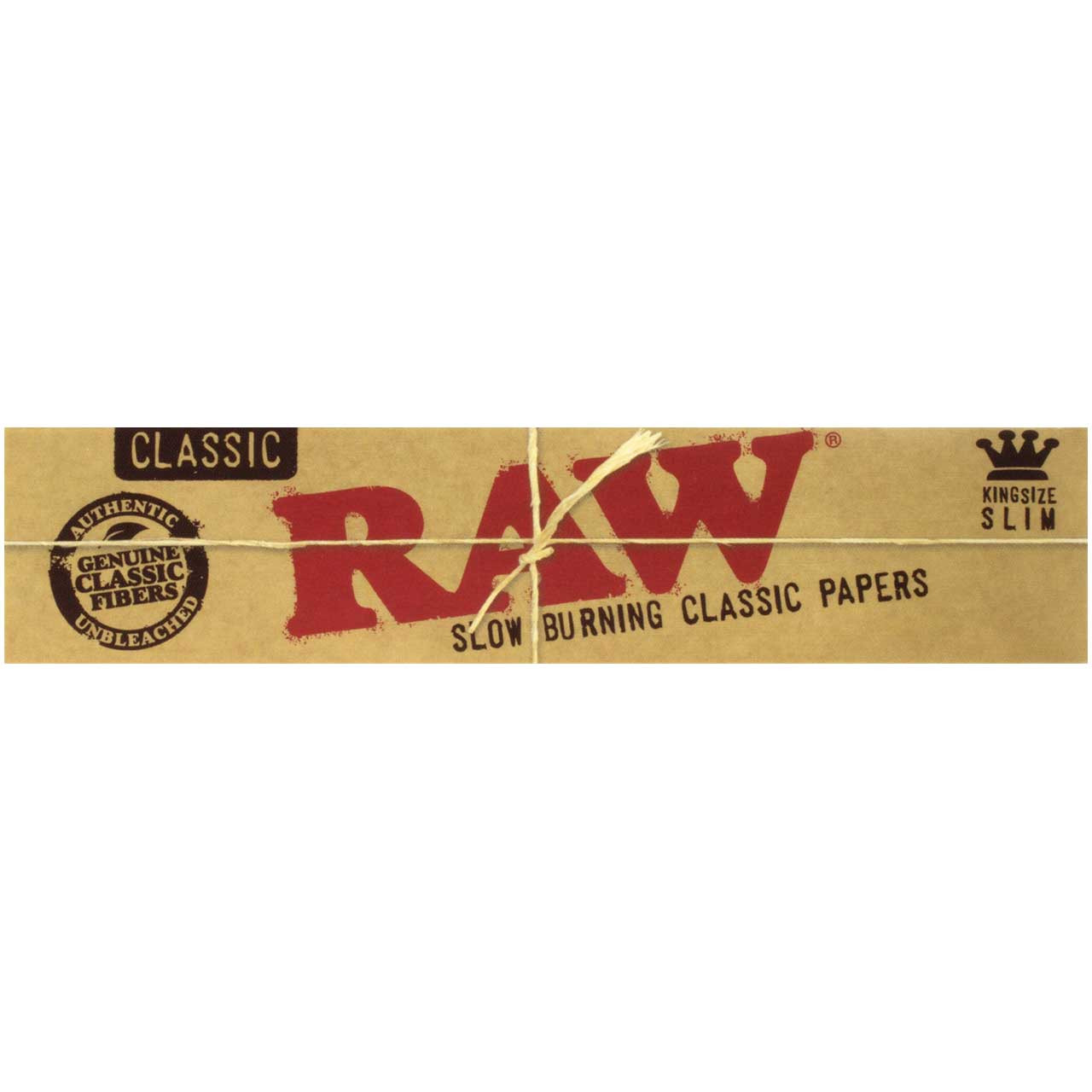
A paper line and a pack format are different choices
Read a RAW product name in parts. “Classic” identifies the line. A size such as 1¼ or King Size Slim identifies the format of the sheet. A name such as Artesano identifies a particular package configuration. Keeping those parts separate prevents a familiar color or logo from doing too much of the explaining.
Two packs can belong to Classic and still differ in size, paper count or included accessories. Conversely, two packs can share a size while carrying different combinations of papers and tips. The product name is the beginning of the specification, not the whole thing.
The High Rise RAW profile gives the broader company and catalog background. Here, we are staying within Classic. Black, Organic Hemp and Ethereal are separate names in RAW’s range, and their descriptions should not be silently transferred to a Classic pack.
The regular booklet keeps the kit separate
The official Classic 1¼ listing specifies 50 leaves per pack and 24 packs per box. Those are two different units of sale. The first describes the booklet; the second describes the box containing booklets. Check which unit a retailer is offering before comparing quantities.
That 50-leaf figure belongs to the 1¼ listing. It should not become a claim about every Classic size. The same catalog presents several sizes, and a familiar package design does not guarantee the same count across them.
The regular booklet makes sense as the baseline because it leaves the surrounding kit separate. Someone with a preferred tip format or a tray already on the table may value that simplicity. There is no reason to buy a combination pack simply because its name sounds more elaborate.
Think of the booklet as one component with its own job. It does not need to organize the rest of the table. The combined formats become interesting when keeping multiple components together solves a specific annoyance in your setup.
Connoisseur puts papers and tips together
Classic Connoisseur combines Classic papers with RAW Original Tips in one package, held together by an elastic band. RAW lists 1¼, Single Wide and King Size Slim options on the product page. The package is the distinguishing feature; choose the size separately.
The appeal is easy to understand if papers and tips tend to end up in different pockets or drawers. Putting them in one pack reduces the number of separate packages to keep track of. For someone who already uses Original Tips, the combination also keeps a familiar component beside the papers instead of introducing a new tip format.
Original Tips are the description to notice here. Do not read the presence of tips as a promise that they are already rolled. RAW uses a different, explicit description for the pre-rolled tips supplied with Masterpiece.
The elastic closure gives Connoisseur a different physical arrangement from Artesano’s magnetic closure. If you are looking at both in a shop, inspect how each opens and closes, and where the tips sit relative to the papers. Those concrete details make the package comparison easier to understand than the names alone.
Artesano brings a tray into the pack
Classic Artesano adds a built-in rolling tray to papers and tips. RAW describes the tray as detachable and the package as secured by magnets. Its listed sizes are 1¼ and King Size Slim.
The detachable part is worth noticing. The tray is a component of the package that can be separated, rather than a promise that any closed paper booklet doubles as a tray. That makes Artesano the format to examine when the missing piece in a compact setup is a surface for keeping things together.
At a desk with an established tray, the extra component may be redundant. In a small kit, it may be the reason to choose this version. The same feature can be useful or unnecessary depending on what is already there.
Our Flower Mill feature looks at another object that can occupy that setup. Thinking about the whole arrangement helps avoid treating every accessory purchase as an isolated decision. The pack should fit around the pieces you actually keep, rather than demand a matching collection.
Masterpiece changes the tips
The official Classic Masterpiece 1¼ page pairs Classic papers with RAW Pre-Rolled Tips. It specifies 16 tips for that pack. The page also lists King Size and King Size Slim variants, so keep the 1¼ count attached to the configuration that supplies it.
This is a meaningful difference from simply including a tip booklet. The tips arrive in their rolled form. That is the product distinction to compare with Connoisseur, rather than assuming the more ambitious name means a different grade of Classic paper.
Pre-rolled tips are also not the same item as pre-rolled cones. One describes the tip; the other describes a paper already formed into a cone. A package containing loose papers and prepared tips should not be confused with a cone pack because both use the words “pre-rolled” somewhere in the description.
When reading a retailer listing, check the included components line by line. The paper size, paper quantity and tip quantity are separate specifications. Do not assume they are equal or transfer a count from another pack with similar artwork.
RAWlet changes the count and the carrying format
The Classic 1¼ RAWlet Pack contains 20 leaves and is designed to fit in a wallet. Its proposition is compact carrying. The catalog does not describe it as another papers-plus-tray combination.
Compare that with the 50 leaves listed for the regular Classic 1¼ booklet. RAWlet contains 30 fewer leaves in the specified pack. That is a quantity difference, not a price comparison: without current prices for equivalent sale units, it does not tell you which is better value.
Wallet fit is the reason to consider this format. If you keep papers in a larger case, the smaller carrying arrangement may offer little benefit. If you want a slim separate supply, the reduced count may be an acceptable tradeoff. Neither preference requires declaring one pack the winner.
Read three parts of the name before choosing
First, choose the paper line and size you meant to select. Second, identify the included components: papers alone, papers with Original Tips, papers with pre-rolled tips, or papers and tips with a detachable tray. Third, check the count and whether the listing sells a pack or a box.
RAW notes that wording and packaging designs can vary slightly. Use the current product description and exact size alongside the photograph. A familiar brown cover is helpful recognition, but the contents list is what settles which configuration you are looking at.
The best fit is the one that keeps the pieces you need together. Once the names are unpacked, the decision is refreshingly ordinary: what belongs in the booklet, what already lives on the table, and what you actually want to carry.