Session Goods makes a clean-looking bong, then gives the small parts their own place in the catalog. That second move is the interesting one. The silhouette gets the photograph. Replacement bowls, downstems, silicone accents and a separate glass body explain how the design works beyond the first unboxing.
There is a useful idea underneath the minimalist styling: a bong can remain recognizable while individual components change. A different footer changes the color. A replacement bowl changes one part of the assembly. Neither requires choosing a completely different object for the room.
The current Paradise model makes that approach easy to see. Clear tapered glass does most of the visual work, while yellow silicone marks the base and smaller fittings. It is a small palette, with each material assigned a specific job.
The silhouette starts with subtraction
Session's own studio story describes a company founded by designers in San Francisco and now based in Los Angeles. The stated design brief puts familiar household objects ahead of traditional smoke-shop styling. The bong follows that brief with a narrow neck, wider lower body and restrained detailing.
The effect is visible without adopting the brand's superlatives. There is no large graphic wrapping around the glass or elaborate external frame. Most of the outline belongs to the vessel itself, with the bowl sitting within a recessed area along the side.
That recess matters visually because it keeps the bowl close to the main form. It also makes the glass body more distinctive than a plain cone. The resulting profile has a recognizable interruption without adding another decorative object to the surface.
Our Houseplant home decor feature explores a different approach to giving cannabis accessories a deliberate place at home. Session's approach puts the emphasis on a repeatable silhouette and removable accents, with fewer visual elements competing for attention.
Glass and silicone divide the work
According to the Paradise product specifications, the bong stands 10 inches tall and uses 4mm borosilicate glass. The listed package includes the body, a silicone accessory set, two downstems and two bowls in different sizes. Cleaning caps are listed as an online inclusion.
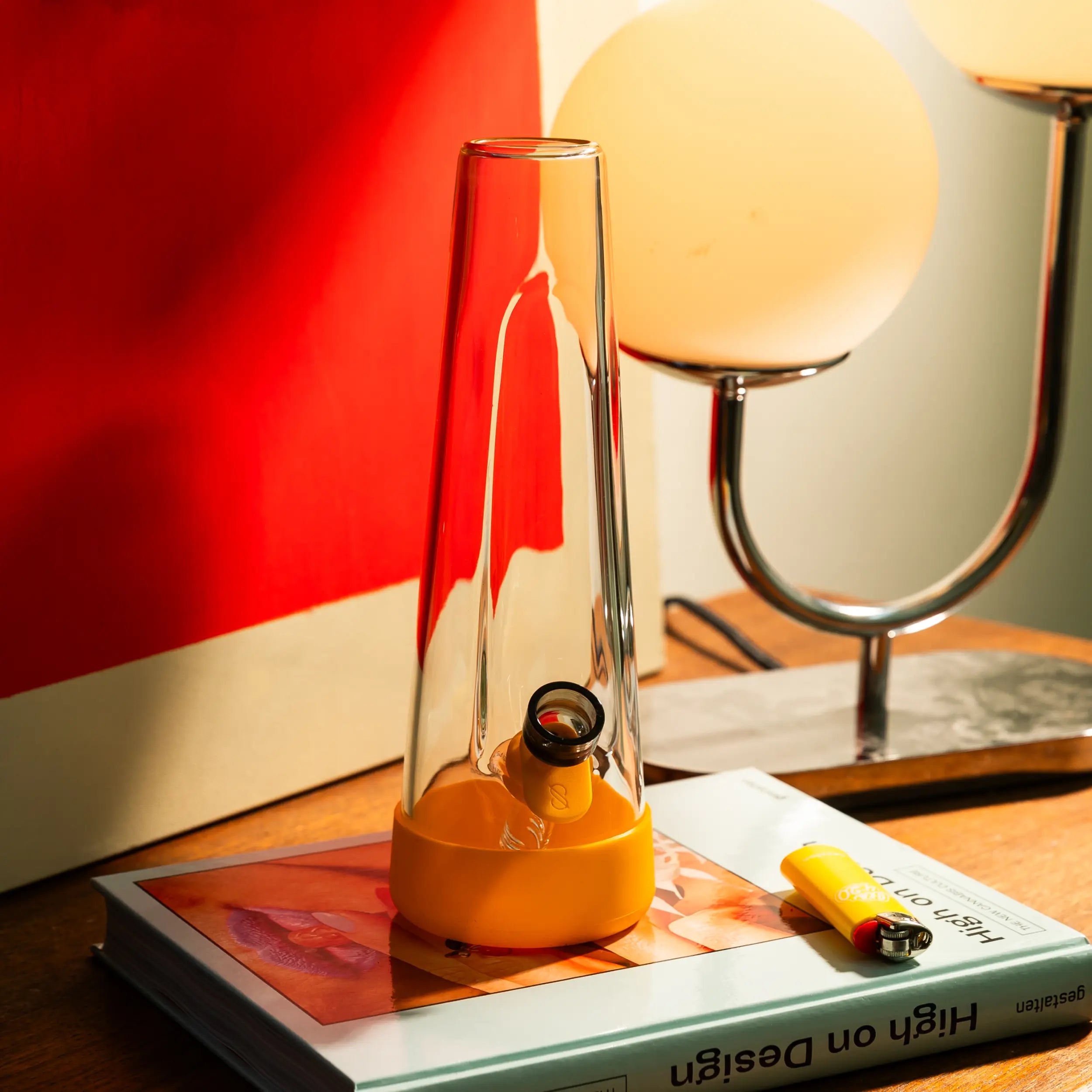
Those materials are easy to distinguish in the finished object. The transparent body holds the large shape, while the silicone footer creates a band at the bottom. The bowl tab and grommets bring that same color into smaller contact points.
In design terms, the footer acts like a visual anchor. It gives a clear starting point to a body that would otherwise disappear into a bright background. Paradise makes that anchor conspicuous, while a darker accessory set would change the balance without changing the glass outline.
The removable accents also make the color decision less permanent. Session sells separate silicone accessory sets for its bong. Someone who likes the shape can change those accents while keeping the body, instead of treating every new colorway as an entirely new collection.
The spare bowl is part of the story
A bowl is a small component, but it has an outsized role in how complete a setup remains. Session includes two bowls with the current Paradise package and offers replacements separately. That makes the spare part visible from the beginning of the purchase.
The replacement bowl listing identifies a 10mm joint and gives separate overall dimensions for the large and small versions. Those measurements describe different things. The outside width of a bowl is not its connection size.
That distinction is useful when comparing accessories already in a collection. Matching the general appearance of two bowls does not establish that their joints fit. Session's published joint specification gives the comparison a concrete starting point.
The bowls come in replacement sets of two. Their role here is straightforward: they are service parts for a piece someone already owns. The catalog does not need to turn them into a dramatic upgrade for the availability of replacements to matter.
The downstem gets its own replacement route
Session also lists a two-pack of replacement downstems made for its bong. These are separate from the bowls and separate from the main body. The product page explicitly identifies the intended Session fit.
That specificity helps distinguish a replacement catalog from a wall of loosely related accessories. An owner can identify the component by name and intended product, rather than comparing photographs of vaguely similar glass tubes.
It also gives each spare a clear storage job. A backup downstem belongs with the bong's parts, even when the assembled piece stays on display elsewhere. Keeping the original packaging or another suitable organizer makes more sense than letting spare glass disappear into a drawer of unrelated tools.
The point is not to collect every replacement immediately. It is to know that the larger object is made from identifiable components. That changes the shopping question from “Which whole bong comes next?” to “Which part of this one needs attention?”
Even the body is a separate item
The most substantial entry in the parts catalog is the replacement glass body. Session lists it as one clear body without silicone parts, bowls, downstems or other accessories. Its contents are narrower than a complete bong package.
That distinction creates a practical option for someone who already has the matching components. The glass body can be considered on its own merits, without paying attention to a photograph of a fully dressed model and assuming all those parts come along.
For a first purchase, the complete package and replacement body serve different purposes. For an existing owner, separating them can make the next decision more precise. The catalog tells you which object is missing, rather than bundling every decision into a fresh kit.
None of this turns glass into an indestructible material. It shows a product architecture in which the large component and smaller fittings have distinct identities. The value lies in those available paths, not a promise that the original assembly lasts forever.
Maintenance shaped the design brief
Session connects its removable components to maintenance in both its studio story and product description. The Paradise page instructs owners to remove the silicone footer, tab and grommets before cleaning the glass. It also describes cleaning caps as part of the current online package.
The design consequence is clear: the assembled object and the cleaning arrangement are different views of the same product. The clean silhouette does not hide the fact that ownership involves several pieces.
This is a useful contrast with the more visibly mechanical assembly in our Stündenglass product feature. Session keeps the hardware visually quiet when assembled, then exposes the separate components when they need attention. The two products make very different statements on a table.
Care directions belong to the relevant material and component. The glass body, silicone accents and cleaning caps should not be treated as identical objects simply because they arrive in one box. Session's own current instructions are the reference for that separation.
A collection can stay small
The strongest argument for this design is that personalization does not have to mean accumulation. A different silicone set changes the appearance of one recognizable bong. A replacement part restores a missing component rather than creating another complete setup to store.
That same focus on construction appears in our Flower Mill spotlight, where the mechanism helps explain the product's place in a kit. Session applies the idea to a different object: a simple-looking vessel with a visible support catalog.
For someone drawn to elaborate glass sculpture, the restraint may be the wrong fit. For someone who wants one clear shape with changeable accents and identifiable parts, it is the central appeal. Session gives the quiet design enough component detail to make the story more than a color choice.
Product specifications and replacement listings were checked October 9, 2026. This feature examines the current design and catalog; it does not claim hands-on testing or guarantee future parts availability.