A storage case, a rigid container and a humidity pack do different jobs. The case organizes a kit. The container holds the flower behind its own closure. The pack is a replaceable component with instructions for use inside an appropriate storage environment. Buying one does not automatically cover the other two.
That distinction is useful before comparing logos or sizes. STASHLOGIX’s Silverton, CVault containers and standard Integra Boost packs illustrate the three layers. This is a comparison of their documented designs and care requirements, not a hands-on performance test or a ranking of what happens to the flower inside.

Start with the things that need a place
Before buying a case, lay out the actual objects you intend to keep together. A container, grinder and small accessories occupy space differently. A tall object can prevent a lid from closing even when the total footprint looks manageable.
Measure the objects, including their lids and handles. Then distinguish a product’s listed dimensions from confirmed usable interior space. A measurement without that distinction is a useful starting point, but it is not proof that your particular arrangement will fit.
This also separates organization from decoration. A display object might look right on a shelf without keeping a full kit together. Our Houseplant home decor coverage explores that design conversation. Here, the first question is more practical: what needs to fit, and how often do you need to reach it?
Silverton starts with the kit
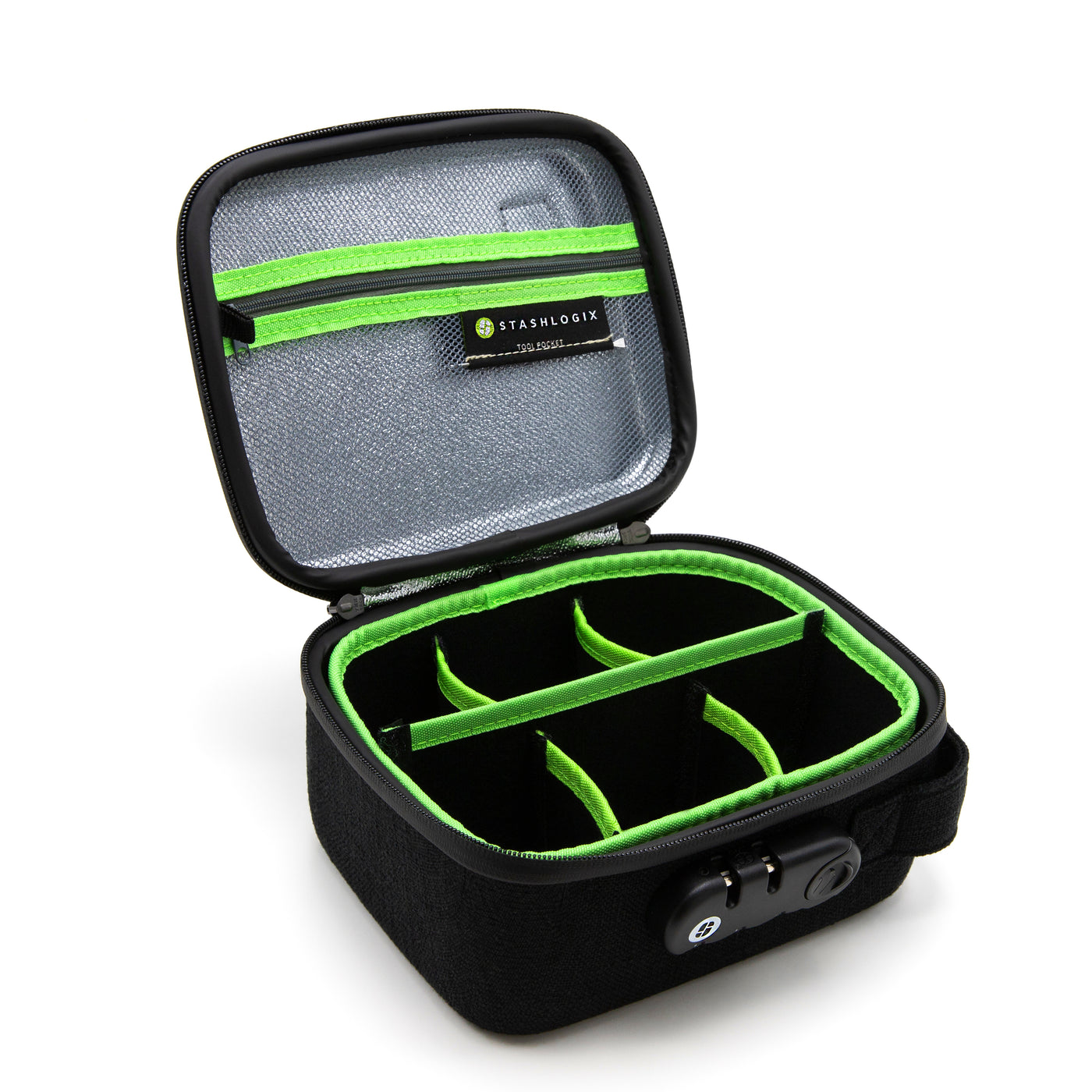
The Silverton product page lists small, medium and large versions. Their stated dimensions are 7.5 by 4.5 by 3.5 inches, 8 by 6 by 4.25 inches, and 11 by 9.75 by 5 inches, respectively. Those are published product dimensions, not independently measured interior capacities.
The design includes removable, adjustable dividers, pockets and a three-digit combination closure. The dividers are the useful detail to examine first. They let the owner arrange separate spaces around the kit, rather than expecting every object to share one open compartment.
In the manufacturer’s open-case photograph, the interior is the point of the image. It shows how the case is organized, but it cannot prove that a particular jar or grinder will fit. Compare your measurements with the selected model and confirm any close clearance before ordering.
A combination closure is also a specific feature, not a general guarantee. This comparison does not establish theft resistance, child-resistant certification or odor-control performance. If one of those is the reason for the purchase, it needs its own product-specific evidence.
CVault starts with the container
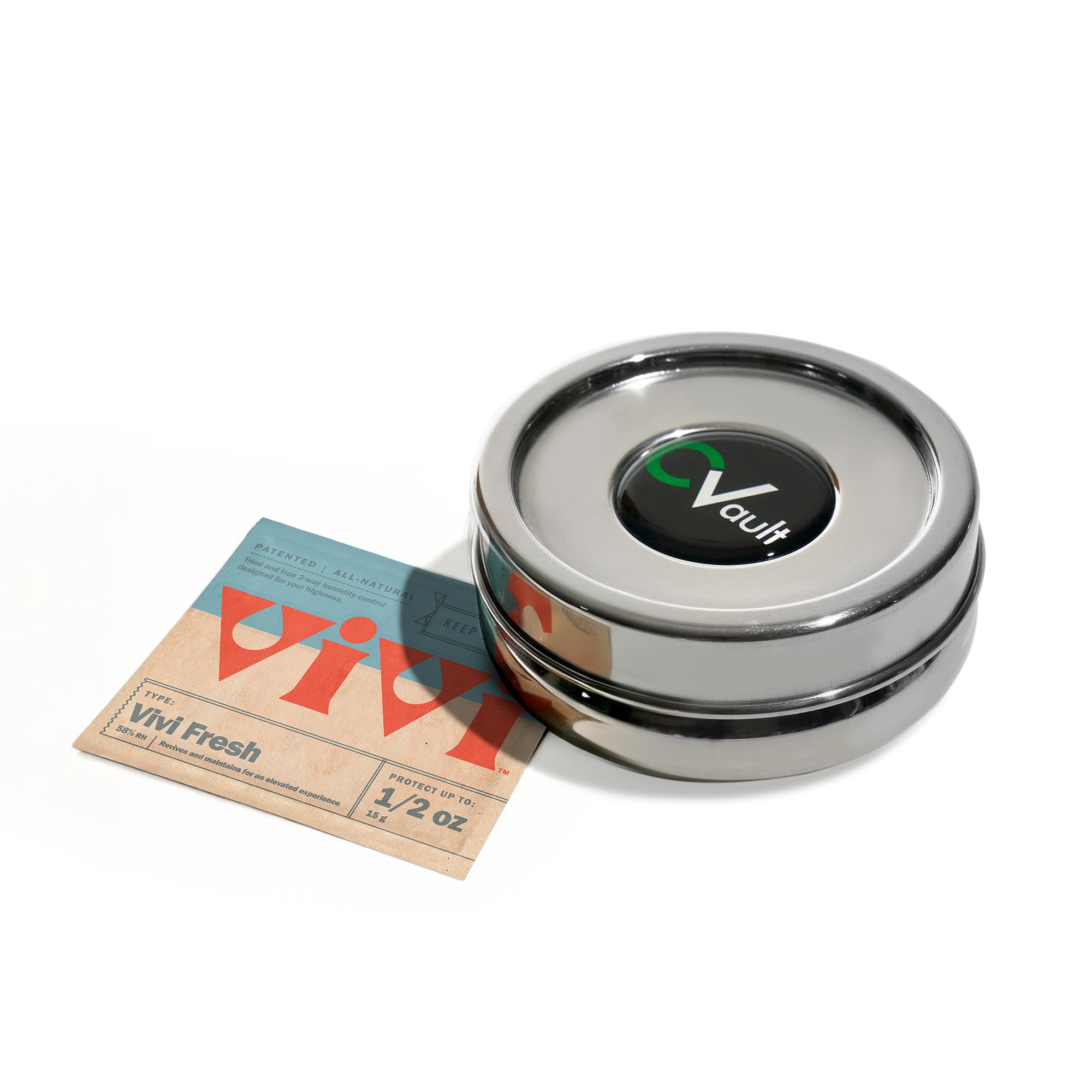
CVault’s current product listing describes 304 stainless steel construction and a silicone gasket. The range includes different closure designs, including twist and latched models. Applicable lids also provide a place for a humidity pack, so the lid is part of the buying decision.
Look at the exact model, not just the family name. A photograph of a latched container does not explain how a twist version opens. The largest listed container also differs in its pack-holder arrangement. A shared brand name should not flatten those physical differences.
CVault’s current materials include the Vivi Fresh name, and the manufacturer’s brand introduction explains the transition from Boveda terminology. That naming change is not, by itself, evidence of a new formula or a reason to assume older instructions apply to every current package.
For a buyer, the useful inspection is straightforward: identify the container, identify its closure, and identify the pack supplied or recommended for that version. Keep those three items separate when comparing a product photograph with the cart selection.
A humidity pack is a consumable
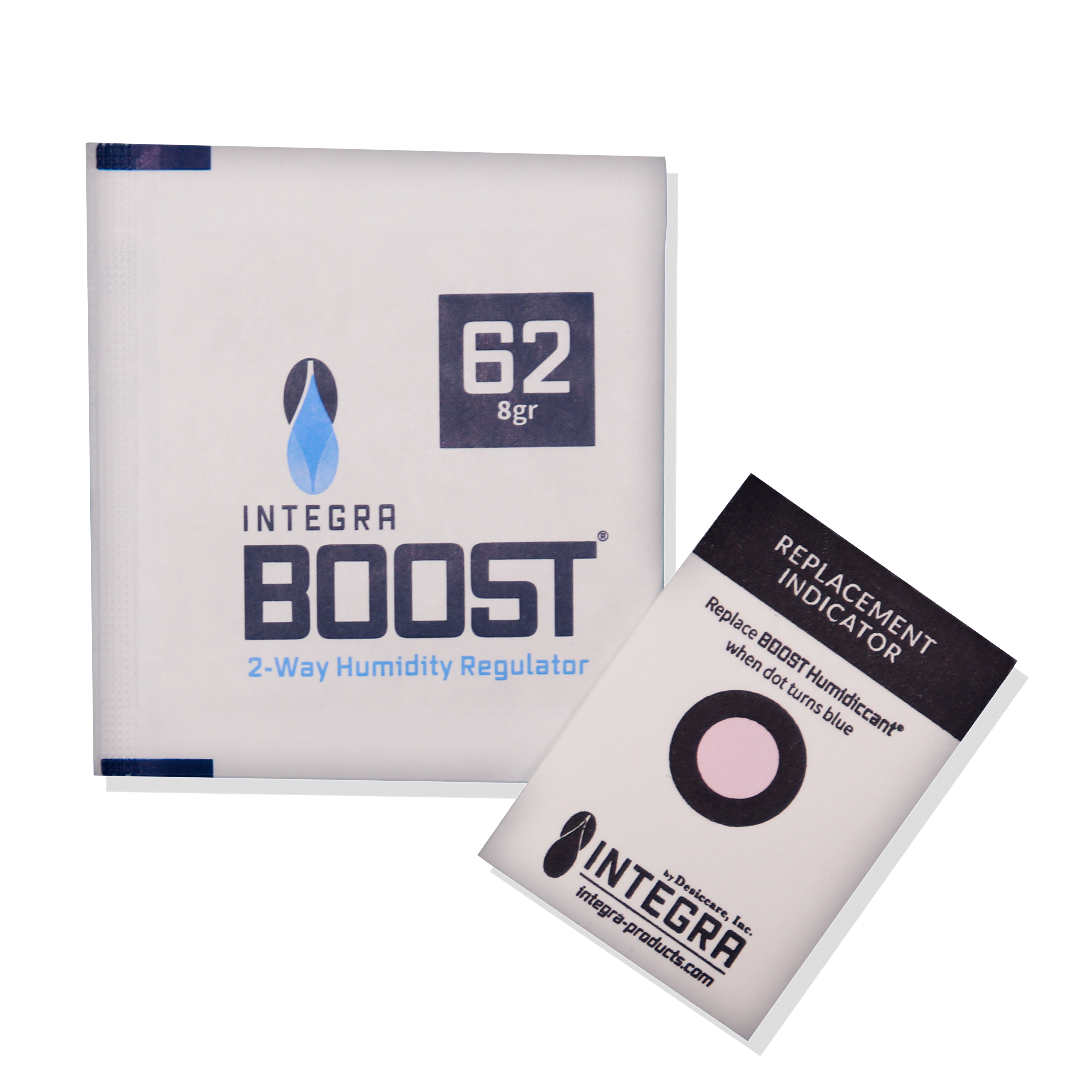
A pack does not replace a container. Integra’s standard Boost guidance describes use inside a sealed container and distinguishes packet size from the amount of product it supports. A number printed in grams on the packet is not the same thing as the flower weight you intend to store.
For standard Boost, the company maps a 4-gram pack to up to 12 grams of product, an 8-gram pack to 12–28 grams, and a 67-gram pack to up to one pound. These are manufacturer recommendations for that product family. Do not transfer them automatically to another Integra line or another company’s packs.
The separate indicator card matters too. Integra says it changes from pink through lavender to bright blue when the pack needs replacement. Keep the card with the setup so the replacement signal is available. A packet purchased without attention to its instructions is an incomplete buying decision.
The company’s product-use information distinguishes the clear outer wrapper from the functional packet. Remove the wrapper as directed while leaving the packet intact. Do not puncture it. Follow the instructions supplied with the actual product rather than treating every pouch in the category as interchangeable.
Care belongs in the comparison
A storage purchase continues after the box arrives. CVault’s instructions distinguish cleaning the base from cleaning the lid: the base is described as dishwasher-safe, while the lid should be hand-washed. A dishwasher-safe claim for one component should not be extended to the assembled product.
Replacement habits differ too. CVault gives its own schedule for Vivi Fresh packs, while standard Integra Boost uses its indicator card and describes a variable service life. Frequent opening and the actual storage conditions matter to the manufacturer guidance. This article does not promise that a pack will last a fixed period in your setup.
Do not combine instructions from two systems into a homemade rule. CVault specifically advises against mixing different humidification products in one container. Read the selected container and pack instructions together, and resolve any mismatch before assuming the combination is supported.
The same ownership-first thinking applies elsewhere in a kit. Our comparison of electric and manual grinders looks at format differences, while the guide to home e-rig parts and care focuses on the pieces an owner has to maintain. Storage deserves that same attention to ordinary use.
Read the warranty past the headline
Check the replacement purchase before choosing a system. Record the exact pack family, size and replacement signal, then find the corresponding refill listing. A multipack photograph can make different variants look similar. Keeping the original instructions with the model information makes the next order easier to identify.
For a case-and-container combination, check two closures independently: the container lid must work normally, and the outer case must close without forcing the arrangement. Removable dividers can change the layout, but they cannot enlarge the case. If the fit is uncertain, ask the seller for usable interior measurements.
Silverton’s product marketing and the STASHLOGIX warranty FAQ do not use equally broad wording. The FAQ describes a limited lifetime warranty for manufacturing defects, excludes ordinary wear, requests proof of purchase and assigns shipping costs to the customer under its stated terms.
That is a reason to confirm the applicable terms, especially for an international order or a purchase through another seller. Keep the receipt and the model information. Do not translate a broad product-page slogan into a promise that every future repair will be free.
A useful comparison therefore has three columns in your own notes: what the object does, what must fit or work with it, and what requires cleaning or replacement. Put the actual selected models in those columns. Leave out performance claims you cannot substantiate.
If the problem is loose accessories, begin with the case. If the problem is the flower’s container, begin with the container and closure. If you already have an appropriate container, read the pack instructions before adding a consumable. Build the setup around the job each piece performs, then buy only the pieces that belong in it.