Seattle Hempfest put cannabis reform speeches on a music stage and kept admission free. That choice helps explain the word the organization uses for itself: protestival. The gathering made room for a good time while asking people to take a political cause seriously.
In 2026, thirty-five years after its 1991 beginning, Hempfest’s history offers a view of what it takes to give cannabis advocacy a public platform. The story runs through peace activism, Seattle parks, volunteer crews and decisions about how people move through a crowded site.
This is a retrospective. The organizer’s current website describes feasibility work on future opportunities and asks readers to stay tuned. It does not establish a new Seattle edition’s date. The surviving accounts can explain the event’s past without turning an anniversary into a promised return.
An organizing culture came before the big stage
The organizer’s account of Hempfest’s beginnings traces the idea to a 1991 peace vigil at Gasworks Park opposing the Persian Gulf War. Its chronology identifies the first gathering as the Washington Hemp Expo, held at Volunteer Park. The political setting and the eventual event site were different places.
That distinction gives the origin more texture than a simple anniversary slogan. An existing circle of activists had a reason to gather and a practice of organizing together. Cannabis reform became another subject they could put before the public through an event.
Vivian McPeak’s March 2009 oral history adds a personal account of that wider organizing culture. Interviewed by Dawnee Dodson for the University District Museum Without Walls, he described creating the Seattle Peace Heathens Community Action Group, bringing alternative-culture people into community service and holding welcoming potluck meetings.
He also remembered the Last Exit on Brooklyn coffeehouse as a meeting point for overlapping Seattle scenes. These are McPeak’s recollections, published in HistoryLink’s People’s History collection in 2010. They describe how an organizer understood the relationships around him, rather than providing an independently verified account of every event.
The park was part of the production
The official chronology places Hempfest at Gasworks Park in 1994 and Myrtle Edwards Park in 1995. Each move changed the production’s setting.
The 1994 entry discusses negotiations, security, emergency planning and insurance. Music and speeches needed a site prepared for the people arriving to hear them.
A park’s shape also changes the experience. A long waterfront route asks an audience to move through the event differently from a single enclosed room. The placement of stages, vendors and access paths becomes part of how people encounter the gathering. A program has a physical form as well as a list of names.
That is one reason cannabis events deserve individual attention. Our guide to six trade shows and festivals looks at several other formats. Hempfest’s particular history begins with a political rally in public space, which gives its production choices a different starting point.
Free admission belonged to the message
The FAQ presents Hempfest first as a political rally seeking changes to cannabis laws. It explains free entry as a way to let people hear that message regardless of income. That is the organizer’s stated purpose for the gate policy, and it is central to its definition of a protestival.
Free admission creates a particular relationship with an audience. Someone can arrive for music, walk past a speaker and stop to listen without first committing to a ticketed conference. The possibility of that encounter is part of the format’s appeal. Entertainment gives people a reason to share the space; advocacy gives the gathering its stated purpose.
The FAQ also lists vendors, merchandise, benefits, sponsorship and membership among its revenue sources. Those activities help explain how an event can keep its entrance free while still needing resources. Access for the attendee and the cost of producing the gathering are separate questions.
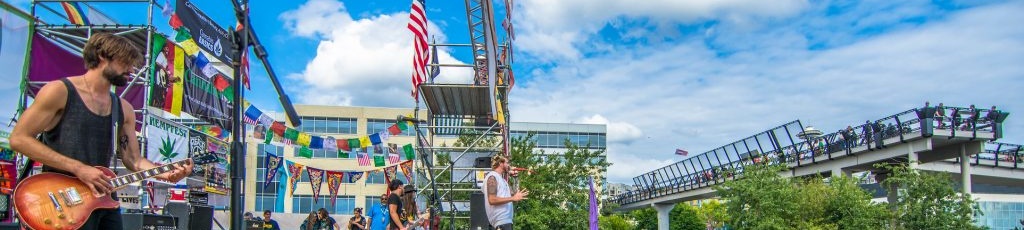
A public stage comes with a ground plan
Some of the most revealing entries in Hempfest’s chronology concern movement rather than headliners. The organizer describes a Saturday crowd crunch in 2009, an overnight review of bottlenecks and changes to obstructions along the site. Its following-year account describes a revised ground plan, including changes to vending placement.
The chronology then records a third event day in 2011 and describes smoother pedestrian flow. These are the organizer’s historical accounts of its decisions. They show a production team treating the shape and timing of the gathering as something it could reconsider.
That work belongs in the cultural story. A stage can promise open participation, but the surrounding space determines how people reach it, pass one another and leave. The practical choices influence whether the event’s invitation feels workable on the ground. The argument for a public platform needs a plan for the public.
The organizing work continued between editions
The chronology says organizers took 1996 off from the event to produce a statewide hemp voters guide. That pause is a useful reminder of the organization’s larger purpose. The annual gathering was one vehicle for advocacy; producing information for voters was another.
It also complicates the habit of measuring an event’s history only through the number of editions. A year without the familiar stage can still contain work connected to the cause. In this account, the change in format makes the political assignment especially visible.
The organization’s core-staff photograph archive preserves another view of that continuity. Annual group portraits put faces beside the organization’s name. They document people gathering to produce an event, offering a different record from a poster built around the most recognizable performer.
A participant’s recap shows another view
Dr. Dabber’s recap of Hempfest’s twenty-fifth year describes the brand operating two booths. Its captions move through demonstrations, frisbee tricks, giveaways and an Ed Rosenthal visit. It is a participant’s promotional account, with the business and its own experience at the center.
That perspective is useful precisely because it is specific. The organizer describes the cause and production. A participating brand records encounters around its booth. Neither account supplies every attendee’s experience, but together they make the field easier to picture as a place where several kinds of participation happened.
A promotional photograph tells you what a participant chose to show. An organizer’s chronology tells you what its authors considered worth preserving. Reading them together adds detail while leaving their different purposes intact.
Photographer Jordan Stead’s captioned 2013 series supplies another perspective. It locates Sunday’s crowds and walkways at Myrtle Edwards Park on August 18, while also focusing on people, pipes and performers. Those captions anchor the photographs to a particular edition. Knowing whose camera made an image, and which day it shows, gives the next reader something concrete to follow.
The archive keeps the event open to examination
Hempfest’s website still brings together its chronology, staff portraits and links to photography from earlier editions. Those materials let the story extend beyond a sequence of headline bookings. Volunteer work, the use of public space and the organization’s own explanations remain available as subjects in their own right.
Our feature on Frenchy Cannoli’s public archive follows a related question: what can a surviving record tell us, and whose perspective does it preserve? For Hempfest, the answer starts with attending to the voices behind each account, alongside the people pictured on the stage.
The next date can remain open while that history is examined. Readers looking for current plans can use the High Rise events directory and confirm details with each organizer. Hempfest’s past already offers a substantial story: a community kept making a case for cannabis reform, and built a public gathering around the chance to hear it.