A grinder becomes more interesting when you can see what its designer changed. HØJ’s KLIP replaces the familiar field of teeth with blades, then builds a magnetic assembly around them. The result invites a closer look at the relationship between the cutting part, the collection chamber and the pieces a person actually handles.
That makes KLIP a useful product-design study for anyone comparing cannabis accessories. Its most concrete differences sit inside the housing. Understanding those differences helps separate a practical preference from a compelling product photograph, without pretending that a specification sheet can replace time with the tool.
Begin with the mechanism
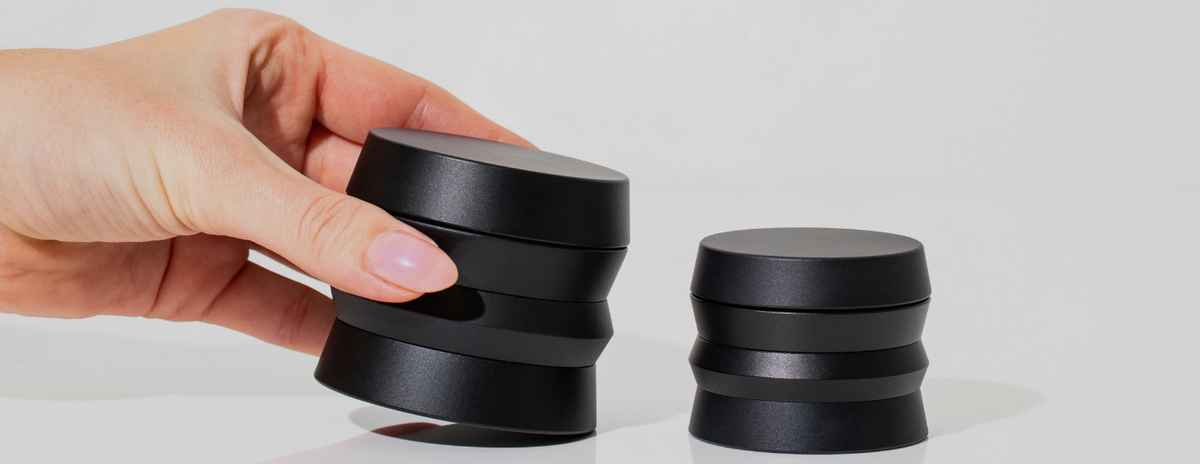
HØJ’s current KLIP listing identifies two blades, three control discs and a coarse collection mesh. It lists a 66-millimeter diameter and a 57-millimeter height. Those details describe the basic proposition: a manual tool whose internal configuration can change while its outer body stays familiar.
The distinction matters because grinders often look similar when closed. A cylindrical housing tells you relatively little about what happens inside. Open it, and the arrangement becomes the story. In KLIP’s case, the blades, perforated discs and collection parts provide separate places to examine rather than hiding every decision inside one fixed chamber.
High Rise’s Flower Mill product profile offers another approach to preparation hardware. Comparing the internal mechanism is more useful than assuming every object sold as a grinder performs the same action. Start with what moves, what stays in place and where the prepared material goes.
The disc and the collection mesh have different jobs
A useful way to read KLIP’s layout is to follow the route through its parts. The cutting area sits above the collection area, with a control disc between them. The collection mesh belongs farther down that route. They may both look perforated in a photograph, but they occupy different positions in the assembly.
That layout turns customization into a physical choice. You can identify the component being changed rather than relying on an unnamed setting. It also creates a small organizational task: removable parts need somewhere to live. Anyone who likes a minimal setup should consider the loose accessories alongside the closed object’s clean appearance.
Look closely at the official exploded photographs before comparing configurations. A diagram that shows every component at once can make the assembled tool seem more complicated than the everyday interaction. Conversely, a single closed photograph can hide the number of pieces involved. Both views are useful because they answer different questions.
Magnets change how the body comes apart
The company describes a thread-free magnetic assembly and a short opening twist. That is a meaningful design choice even without adopting broader claims about ease of use. The question for the buyer becomes how the pieces locate and separate, rather than how long a threaded section takes to unscrew.
Think about the complete sequence: opening the top, finding the correct orientation, closing the body and reaching the lower compartment. A tool can feel simple during one movement and less intuitive during another. Product photography rarely shows those transitions, so a demonstration should cover the full sequence rather than a dramatic single spin.
The same applies to portability. A compact closed shape does not explain how confidently its separate parts remain together during travel. Before treating a magnetic assembly like a sealed container, look for the manufacturer’s instructions about transport. The attraction of an easy opening should not become an assumption about every other use.
Read the shape through your hands
KLIP’s exterior alternates between broader and narrower bands. In the photographs, those changes give the fingers places to locate around the body. The housing also has a clear visual rhythm: it reads as a stack of related sections, even though the dark finish keeps their boundaries relatively quiet.
Dimensions become more useful when translated into a familiar object you already hold. Measure the diameter of your current grinder and compare that with the listed width. Then consider the height of the assembled tool. A few millimeters can change how an object sits in a pocket or fits inside a storage case.
Personal comfort needs a personal test. A manufacturer’s suggestion that a mechanism helps people with limited mobility is not enough to establish suitability for a particular hand. If that is central to your decision, the relevant questions are specific: where pressure is applied, how firmly the body must be held and whether the pieces are manageable separately.
Customization needs a reason
Interchangeable parts are useful when they solve a repeated problem. They matter less when they become a collection of options that never leave the box. Before paying for modularity, identify the adjustment you would actually make and how often you expect to make it.
Someone who prefers the same setup every time may value a fixed configuration. Someone who enjoys comparing hardware may appreciate removable discs and a visible internal system. Neither preference establishes a universal winner. The better match depends on whether the additional choices feel useful or simply create more parts to keep track of.
The Tectonic9 product page provides another point of comparison within High Rise’s directory. It puts attention on dispensing. KLIP puts attention on the cutting assembly and removable components. Comparing the particular problem each design addresses is more informative than ranking unrelated features in one long list.
The marketing deserves a separate reading
HØJ’s May 2022 account of KLIP’s development describes a founder dissatisfied with conventional grinders. The company presents slicing as the response. That origin story explains the design’s emphasis, but the accompanying claims about potency and the experience of consumption require a different kind of evidence.
A photograph can show the blade arrangement. A specification can establish a stated dimension. Neither demonstrates how much material a person will save or how an experience will change. Those are separate questions, and a useful product feature should keep them separate rather than turning every marketing phrase into a conclusion.
This distinction also makes comparisons fairer. If one company describes its tool through cutting geometry and another through a broad promise, compare the observable design decisions first. Ask what was measured, under which conditions and against what alternative before treating a performance claim as an established advantage.
Look beyond the lifetime headline
The current product FAQ gives KLIP’s warranty limits more detail than the headline. It excludes bent blades and specified damage involving magnets, heat, prolonged submersion and dishwashers. Those boundaries belong in the ownership decision because a repair promise only becomes useful when the relevant condition is actually covered.
That is also a reason to keep the instructions with the product. A removable component may be easy to reach while still requiring particular care. The fact that a tool comes apart does not establish that every cleaning method is suitable for every part. Follow the current guidance for the exact model rather than borrowing a routine from a different grinder.
For any modular accessory, ask how a damaged or missing component is handled. Is the part sold separately? Does the company require photographs or proof of purchase? Where does a service request begin? These are practical ownership questions worth resolving while the original listing and receipt are still easy to find.
A useful place in the comparison
KLIP’s strongest story is the one its parts can support. A blade assembly, interchangeable discs and magnetic sections offer specific design choices to examine. The exterior gives those choices a compact form, while the separate accessories make the system visible once it is opened.
Use the broader High Rise product directory to compare that approach with other formats. Keep the comparison grounded in size, assembly, access and the adjustment you actually want. KLIP gives you plenty to look at without asking you to accept a laboratory result that the photographs cannot provide.