Curaleaf raised its offer. Aurora still said no. By October 19, the argument had moved beyond the price: Curaleaf accused Aurora of opening confidential information to other interested parties while excluding Curaleaf from that process.
The proposed acquisition remains contested. Aurora’s board recommends rejecting it; Curaleaf wants engagement and continues to defend its offer. Neither announcement describes a completed acquisition. For cannabis readers, the useful question is what each company is trying to build—and which promised changes still depend on a transaction that has not happened.
Beard Bros Media’s October 19 report covered Aurora’s rejection of the revised bid. The same day brought a further response from Curaleaf, making the dispute sharper than a simple takeover-rejection headline. The California perspective of Beard Bros’ operator-led newsroom makes this a story about the industry behind the financial contest.
The new fight is about access
In its October 19 statement, Curaleaf said it continued to be denied access to confidential due diligence despite repeated requests. It contrasted that position with Aurora’s disclosure that other parties had entered confidentiality and standstill agreements and were examining information about the business.
Curaleaf chairman and CEO Boris Jordan argued that the process should include his company. The statement also challenged Aurora’s criticism of its valuation and projected savings. Those are the bidder’s arguments. Calling them facts in a company release does not settle the dispute between the two boards.
There is a revealing distinction in Curaleaf’s filed offer amendment: the offer is not subject to a financing or due-diligence condition. Curaleaf is pressing for information while maintaining a proposal that does not make completing diligence one of those conditions. The access dispute is therefore about its desired engagement, rather than a newly announced diligence requirement.
A cash-and-share offer has moving parts
Curaleaf’s October 6 filing records the amended offer: US$1 in cash and 0.4013 of a Curaleaf subordinate voting share for each Aurora common share, subject to the offer’s adjustment provisions. This is a mixture of cash and ownership in the bidder.
The filing also sets the revised expiration at 11:59 p.m. Mountain Time on December 4, 2026, unless the offer is extended, accelerated or withdrawn. That is a deadline in the offer process, not an announced date for the businesses to merge.
Most original terms and conditions remain in place except where the amendment changes them. The filing points readers to the offer documents for those terms. A press release describing a stronger proposal does not replace them, and a revised offer does not mean Aurora’s board has agreed to a sale.
In its October 5 announcement, Curaleaf calculated an implied value of about US$5 per Aurora share using its own October 2 closing share price and the stated currency conversion. That dated calculation should travel with the number. It is not an all-cash payment fixed at US$5 regardless of market movements.
The announcement raised the maximum consideration to US$6 per Aurora share. A cap is a ceiling under the offer’s terms, rather than a promise that every share will receive that amount. The distinction matters because the attractive round number in a headline can hide the mechanics underneath it.
Aurora is defending a different future
Aurora’s October 14 response said its board unanimously recommended rejecting the revised bid after the independent special committee’s review and an updated financial opinion. Aurora argues that the proposal still fails to reflect the value of its business.
Its objections include the exposure shareholders would take to Curaleaf stock and the support provided for projected cost savings. Aurora also questions how the cash component relates to its own balance sheet. These are Aurora’s stated reasons for opposition; they are not an independent finding that one valuation is correct.
The special committee is considering possible third-party transactions alongside Aurora’s standalone strategy. The company disclosed agreements allowing other parties to examine confidential information, but did not promise that this process would produce an alternative transaction.
The amendment also shows how Curaleaf modeled its US$40 million annual savings estimate. It applied its historical selling, general and administrative expense ratios to Aurora’s revenue. The model does not assume revenue growth or savings in the cost of goods sold, and management had not identified costs to achieve the savings or offsetting dis-synergies. It remains a projection, not money already saved.
The target has been moving toward international markets
Aurora’s August 5 quarterly results help explain the operating business behind the dispute. For the quarter ended June 30, 2026, international medical cannabis net revenue was C$43.3 million, compared with C$37.1 million a year earlier. The company attributed that increase mainly to Germany.
Canadian medical cannabis net revenue moved the other way, falling to C$20.7 million from C$27.7 million. Aurora also described winding down its consumer cannabis business. The figures are Canadian dollars, unlike the US-dollar cash component in Curaleaf’s offer, and the quarter predates the October exchange.
The company reported acquiring Safari Flower Company in April and announcing its Ontario facility’s three-year EU-GMP certification in July. That adds a concrete cultivation and manufacturing asset to the story. International expansion here involves facilities and distribution relationships, not simply adding another name to a dispensary menu.
For a California audience, this is a useful limit on the comparison with a familiar local brand deal. Aurora’s stated direction is centered on international medical markets. The transaction’s scale does not establish an immediate change to what California shops can stock.
The shelf already carries corporate histories
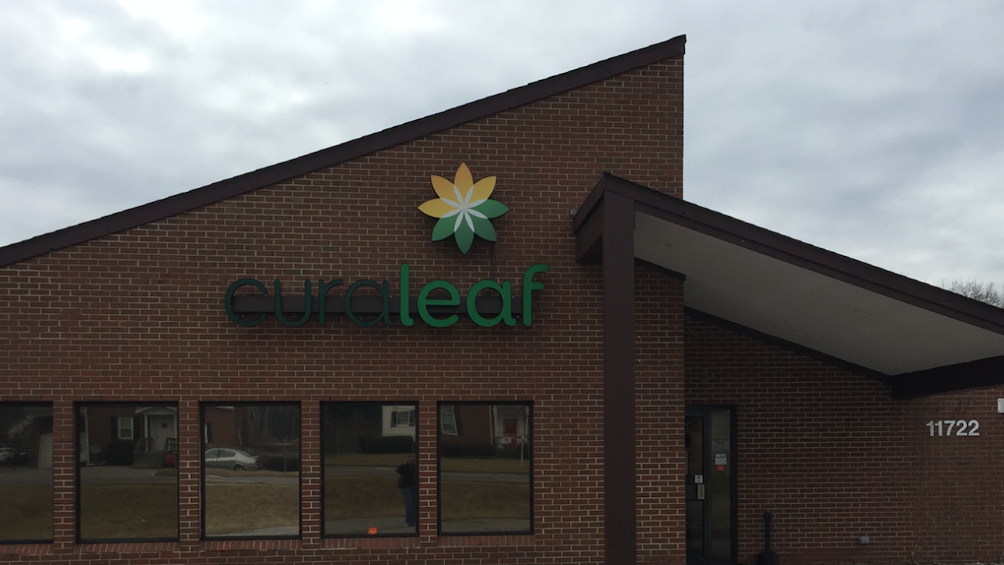
Curaleaf’s portfolio includes Select, the vape brand that began in Portland. That existing brand history is one reason cannabis ownership stories reach beyond stock tickers: the company a reader knows from packaging can sit inside a much broader organization.
The Select acquisition’s February 2020 closing announcement describes what changed hands: manufacturing, distribution, marketing, sales and intellectual property. Curaleaf said the transaction closed on February 1. It paired Select’s western wholesale presence with Curaleaf’s retail operations and appointed founder Cameron Forni president of Select at that time.
That history gives the ownership question some physical weight. A cannabis acquisition can involve the people making the product, the routes getting it to stores and the rights behind its name. It also supplies a useful comparison in transaction status: Select’s announcement reported a closing, while the Aurora exchange remains a dispute over an offer.
The present proposal concerns Aurora as a company. It does not announce a Select product launch, a California retail rollout or a change to a particular cartridge. Those would require their own product and market announcements. Familiar branding makes the business story easier to recognize, but it should not invite invented consequences for the shelf.
Curaleaf presents the potential combination as an international platform with greater scale. Aurora argues that remaining independent or finding another transaction could preserve more value. Both positions ask shareholders to judge a future that has not arrived. Cannabis customers, workers and smaller operators have different questions about how any eventual arrangement would function.
Conditions still stand between an offer and ownership
The amendment lists a statutory minimum tender of more than 50% of Aurora’s outstanding common shares, excluding Curaleaf and other non-independent holders. It also describes a separate 66⅔% fully diluted tender condition that Curaleaf may waive, plus required regulatory approvals. Those conditions explain why public disagreement and a live bid can continue together without ownership having changed.
WeedWeek’s October 15 newsletter also flagged the takeover dispute among its industry updates. Readers following this beat can find more about WeedWeek’s cannabis reporting alongside the original company documents linked here. The next update should identify an actual change in terms, access or decisions, rather than treat every new statement as a completed step.
As of October 20, the central disagreement is still open: Curaleaf believes its enhanced proposal deserves a place in Aurora’s process, while Aurora’s board says shareholders should reject it. The price matters. So do access to information, the business each side wants to build and whether any proposed arrangement becomes an actual agreement.